How Local Conditions Play In
Most of the housing stock around here went up between 1938 and 1985, with the typical build year landing close to 1950. That matters for noise because a door built on original hardware has had seven decades of expansion and contraction to work with. Steel springs, tracks, and hinges all move slightly with temperature, and this area sits in a severe cold climate band, not a mild one. That means long stretches of real freeze, not a cold snap here and there.
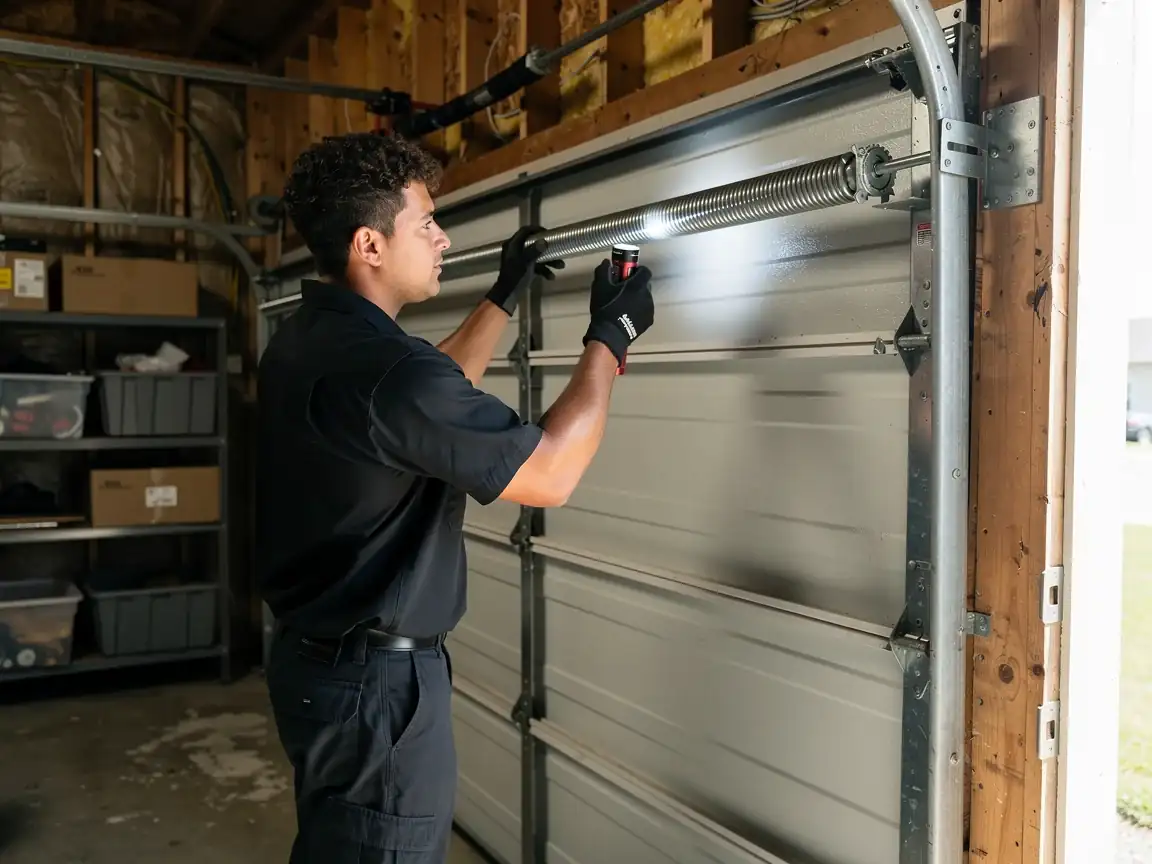
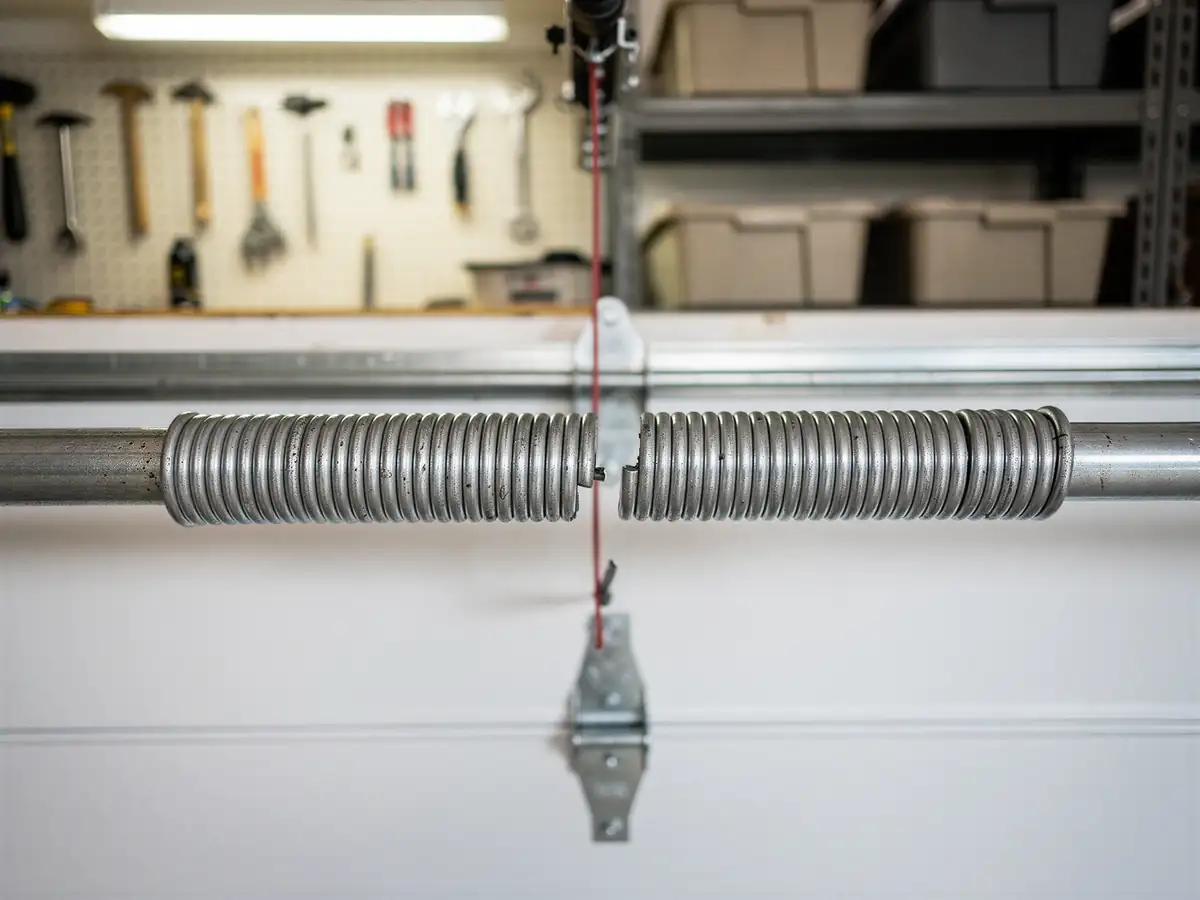
When a torsion spring contracts hard in a cold snap, it can pop or creak as it settles - that's different from a spring that's failing. A track bolted to a jamb that's shifted slightly over 70 years will rattle on cold mornings in a way it won't in July. The noise itself isn't the diagnosis. The age of the house behind it, and the season you're hearing it in, tell you more than the sound alone.
A door on a house built in 1978 and a door on a house built in 1952 can make the exact same grinding noise for two completely different reasons - one's a worn roller, the other is original hardware finally giving up the last of its lubrication. Knowing which era you're dealing with changes what we'd actually check first.
When Waiting Is Fine
Not every noise needs a same-week call. A door that pops once or twice on the first genuinely cold morning of the season, then runs quiet the rest of the week, is usually just steel doing what steel does when it's cold - nothing to chase down. Same with a faint squeak from a roller that hasn't been lubricated in a while. That's maintenance, not failure.
We'll say plainly: if your door is still opening and closing on schedule, holding position, and the noise is consistent rather than getting worse, you can wait and watch. Spraying the rollers and hinges with a silicone-based lubricant (not WD-40, which attracts grit) often quiets things down on its own.
What we won't do is tell you to wait on a noise that's changed character - a grind that turns into a bang, a squeal that's now accompanied by the door jerking on one side. On hardware this old, a sound that's new or worsening is the one worth a look, not the one that's been there every winter for years.
What Most People Get Wrong
The most common mistake we see is treating every noise the same way
Oiling everything and hoping it goes away. On a house built in the 1950s or 60s, a loud noise from the spring area is often not the spring at all. It's the stationary cone or the center bearing plate, parts that were common on doors from that era and that aren't stocked the way modern hardware is.
The second mistake is assuming track noise means the track is bent
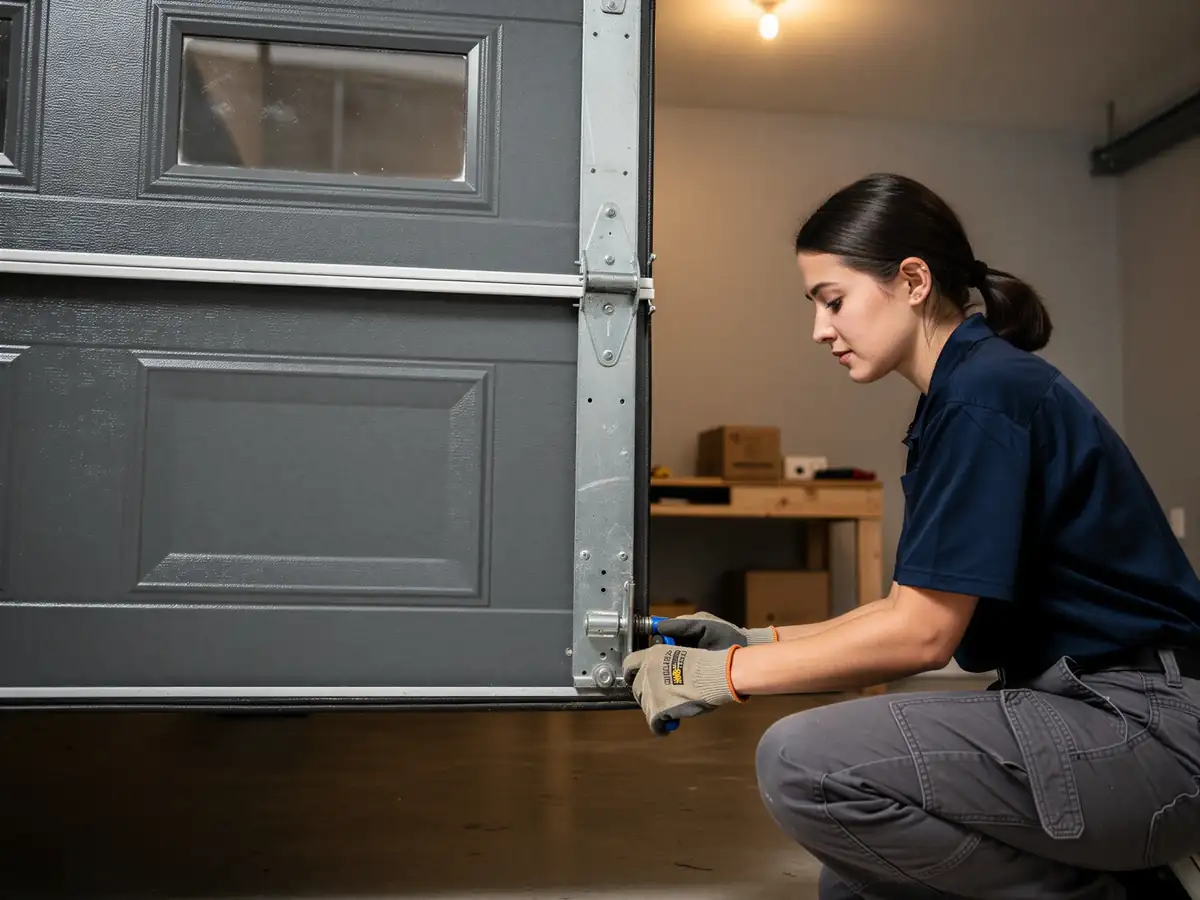
Across the pre-1960-heavy housing stock that makes up most of this area's 53 named communities, a lot of track noise actually comes from the bracket connecting the track to the framing, which has loosened slightly over decades of seasonal wood movement. Tightening that bracket is a different job than replacing a track, and a much cheaper one.
We'll also say this plainly
We don't always know which it is without putting hands on the door. Anyone who tells you over the phone exactly what's wrong without seeing it is guessing. On hardware this old, the only honest answer before an inspection is "probably one of a few things."
The Situation
Across the households we'd expect to serve from Greensburg out through Jeannette, Youngwood, Latrobe, Delmont, and the other nearby communities, 44,139 of 83,379 households own their house rather than rent it. At a median household income of $55,909, most owners here are weighing a repair against a replacement carefully, not reaching for the newest opener because it exists.
That's the backdrop for every noise call: older housing stock, a real winter, and owners who want to know if a sound is a $40 fix or the start of something bigger. We'd rather tell you it's the bracket than sell you a new spring kit you didn't need. We also won't pretend every noisy door is a quick fix - sometimes the hardware is old enough, and parts scarce enough, that replacement genuinely costs less over time than chasing repairs on a door built before 1960.
If you're hearing something new, the honest first step is figuring out what era your hardware actually is, not guessing from the sound alone.