How We Fix It
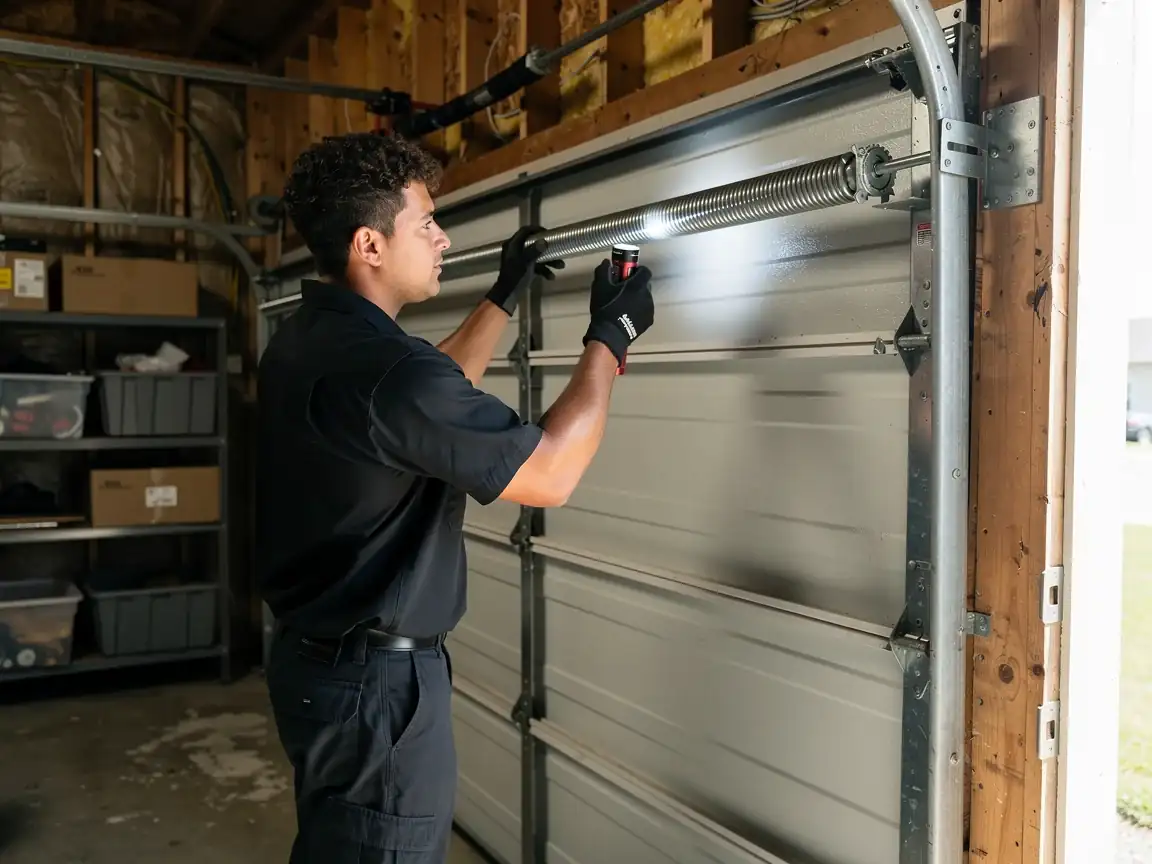
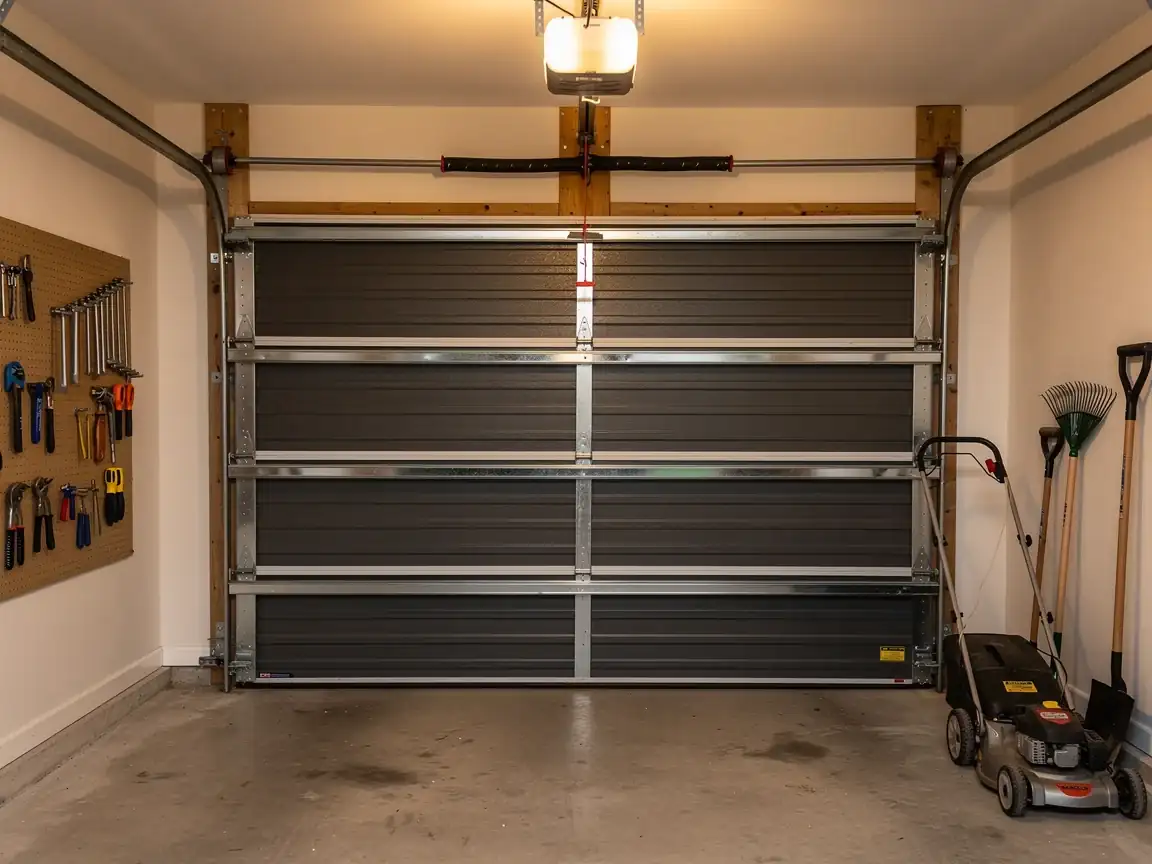
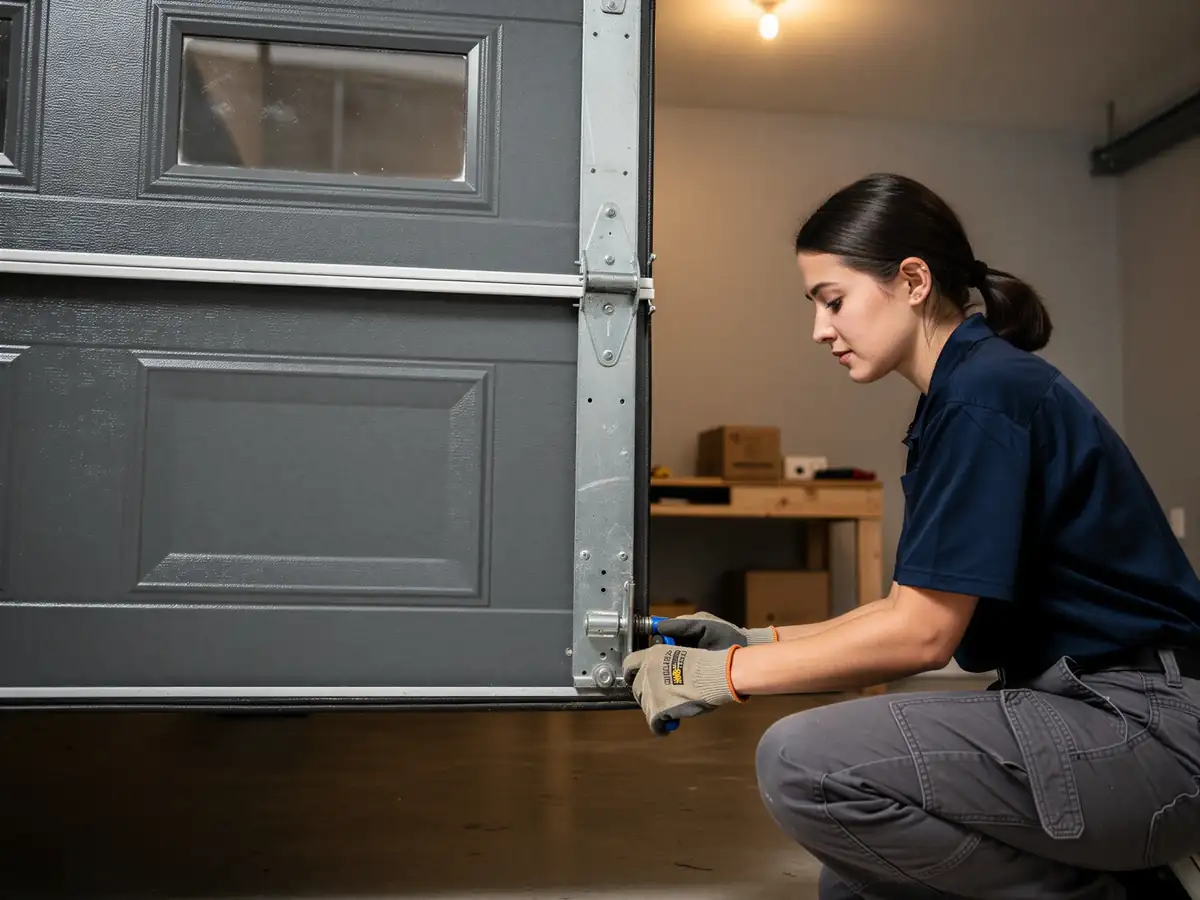
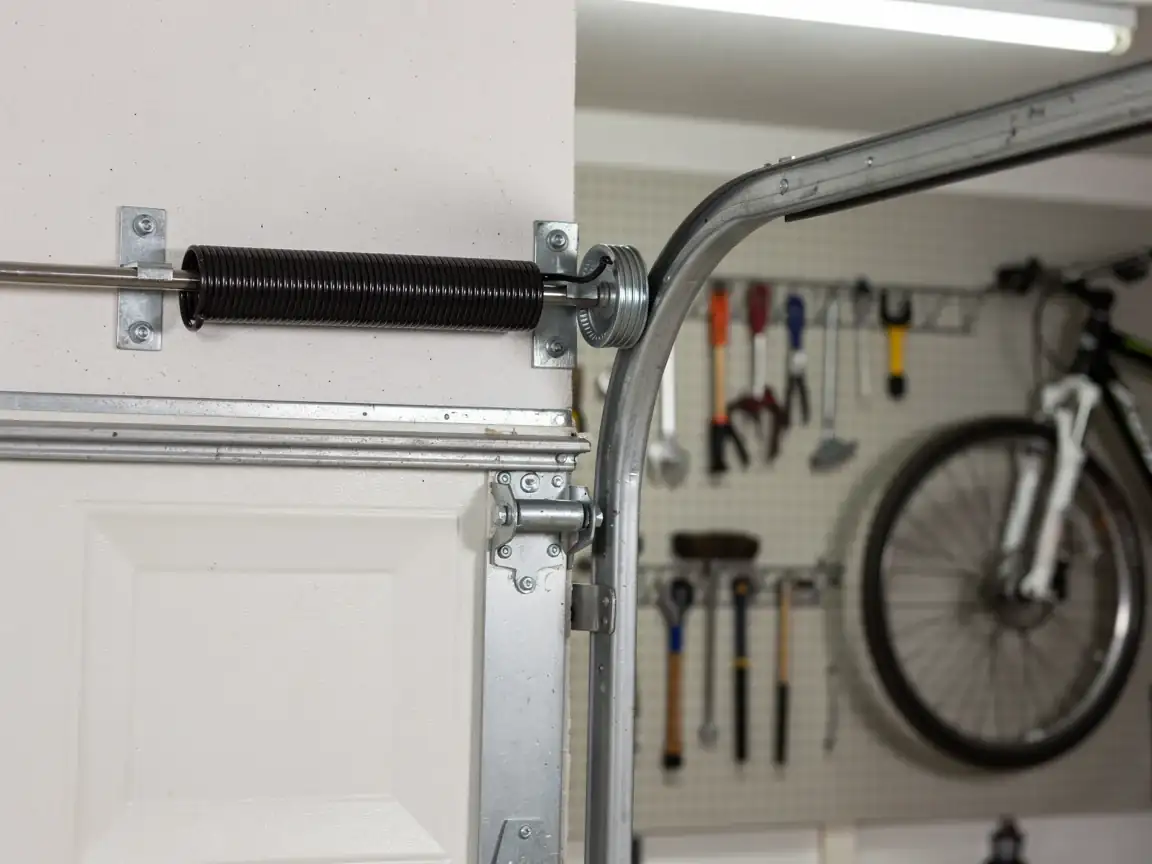
Most houses in Greensburg went up between 1938 and 1985, with the median built around 1950, so a lot of the original garage doors and track hardware are older than anything we carry on the truck. When we get a call, the first thing we check is whether the spring is torsion or extension, because a surprising number of homes in this area still run the older extension-spring setup along the horizontal track instead of a torsion bar over the header. We measure the door, weigh the panel if we have to, and match a spring rated for that load rather than guessing off the old one's wire gauge, which is often rusted past reading anyway.
Track alignment comes next. On a lot of the original single-car openings around town, the vertical track was shimmed to a stud layout that doesn't match anything built today, so straightening it is usually more practical than swapping it. We also check the cable drums and the bottom brackets, since those take the most wear on doors that have been cycling for sixty-plus years.
Here's the limit: if you want an exact match to the original 1950s hardware - the specific drum style, the painted finish, that kind of thing - we can't source that. We fit a modern equivalent sized to your opening and move on. If the frame or jambs have shifted enough that nothing squares up anymore, that's a carpentry problem before it's a door problem, and we'll tell you that straight.
What Causes It Around Here
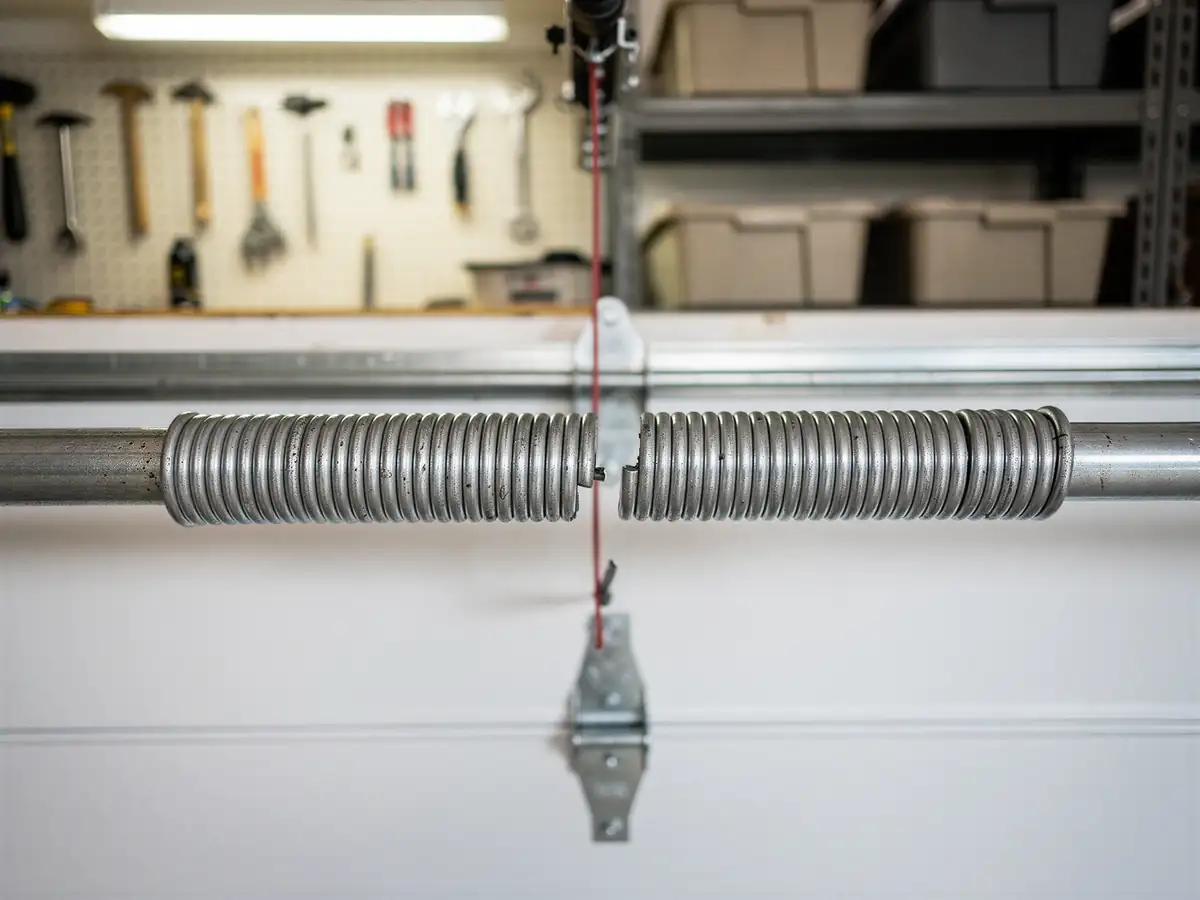
Greensburg's winters fall into the severe end of the cold climate band, which means steel springs contract and lose tension fast on sub-freezing mornings - a spring that was fine in October can be wound a quarter-turn tight by January just from the metal shrinking. That extra load is what snaps a weak coil on the first cold snap of the year, usually with a bang loud enough to bring someone outside to check.
Across the named communities in this service area, the housing stock is overwhelmingly pre-1960, and older doors generally run uninsulated steel or wood panels with no thermal break. The panel itself doesn't do much work holding shape against the cold, so more of that stress transfers straight into the hardware - the hinges, the rollers, the spring. Grease that was fine in summer thickens in a cold garage and stops lubricating the way it should, so rollers bind right when the steel is already stiff and contracted. None of this is a defect in any one door. It's what happens when seventy-year-old steel meets a real winter, year after year, without anyone touching the hardware in between.
Doing It Yourself
There's real maintenance a homeowner can do safely
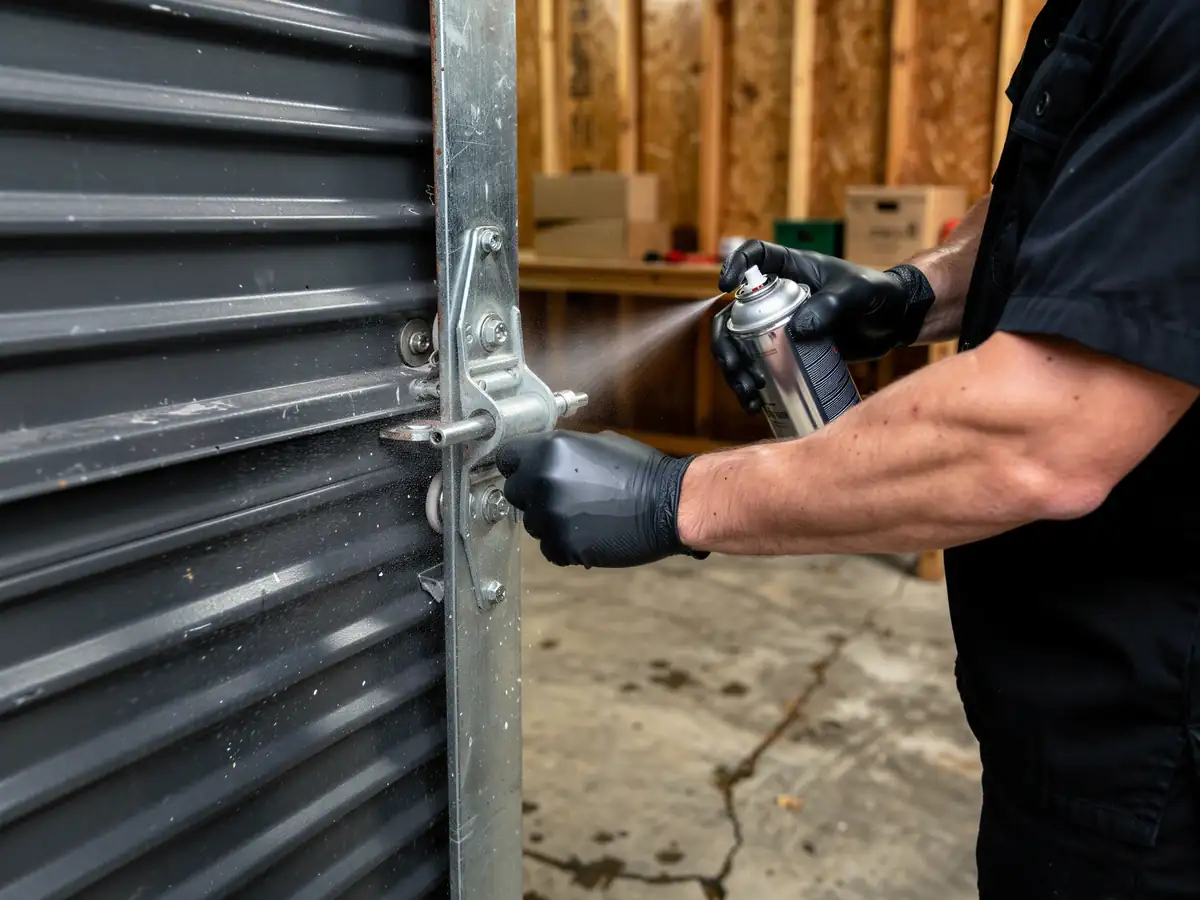
Wipe down and lubricate the rollers and the track with a garage-door-rated lubricant before the first hard freeze, not a household oil that gums up in the cold. Check the weatherstripping along the bottom panel - if it's cracked or flattened, cold air gets under the door and the vinyl stops sealing against the slab, which you'll feel as a draft more than see as a problem.
You can also do a balance check
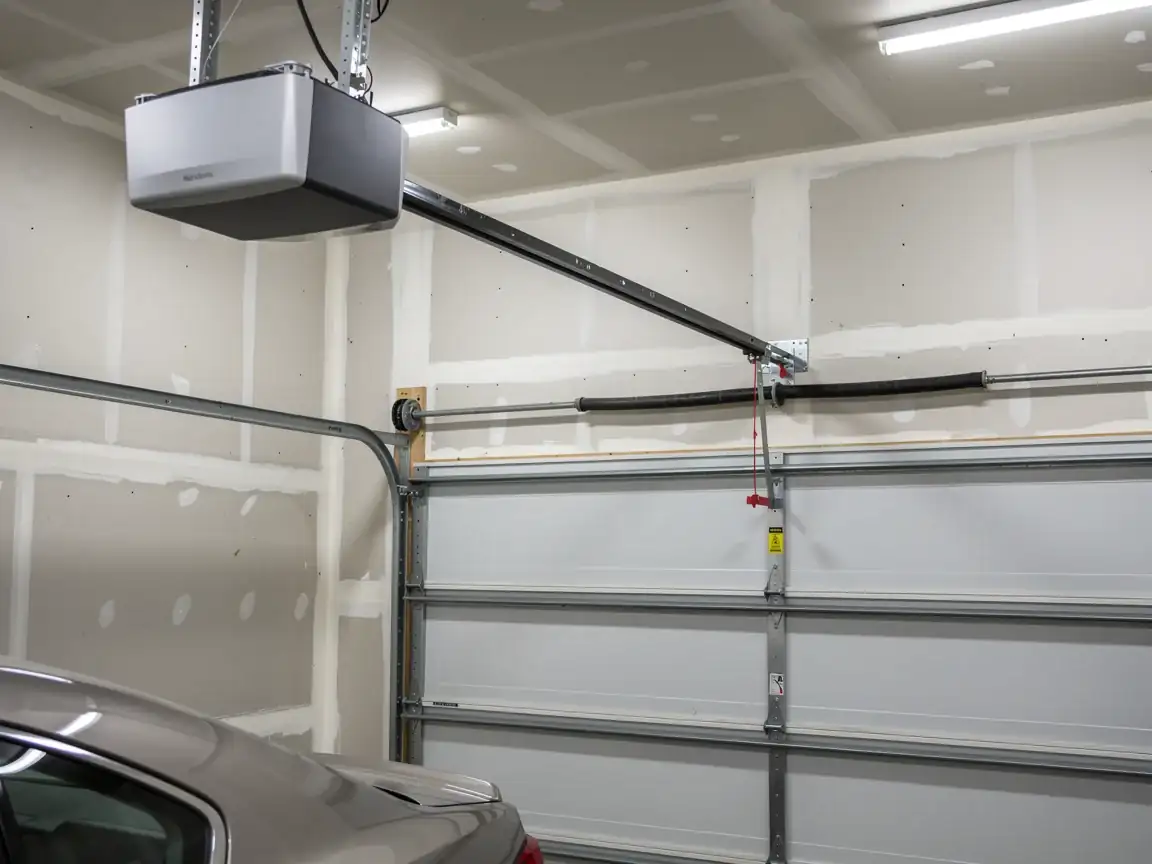
Disconnect the opener (pull the red release cord), lift the door halfway by hand, and let go. A balanced door stays put. If it drifts up or slams down, the spring tension is off, and that's not a DIY fix.
Do not touch the torsion spring itself, the winding cones, or the cable under tension
That's where people get hurt, and it's also where a mistake costs more to undo than the original problem. With median household income here at $55,909, a lot of Greensburg homeowners want to know when a repair job is worth it versus a full door swap - and the honest answer is that we can usually tell you in five minutes once we've looked at the spring, the track, and the panel together.
What You Are Seeing
A loud bang followed by a door that won't budge, or that opens six inches and stops, is almost always a broken torsion or extension spring - the opener can't lift the weight on its own. A door that drags, binds, or grinds partway through its travel on a cold morning but runs fine by afternoon usually points to a track that's pulled slightly out of alignment, made worse by contracted steel.
If the opener runs but the door reverses before it reaches the floor, check the close-limit setting first, but on an older door that's been re-tensioned a few times, it can also mean the spring is slightly over- or under-wound for the current panel weight. A door that's noticeably slower to respond on the coldest mornings, especially in Jeannette or Youngwood where we see the same 1950s-era stock, is often just thickened lubricant and worn rollers rather than anything mechanical failing outright.
If you're in Jeannette, four miles out, or Youngwood, five miles out, you're looking at the same cold-snap failures we see in Greensburg, just on the same vintage of hardware. A visible gap at the bottom corners, or a panel that looks slightly twisted, usually means a roller or hinge has given out and the door is running out of square.