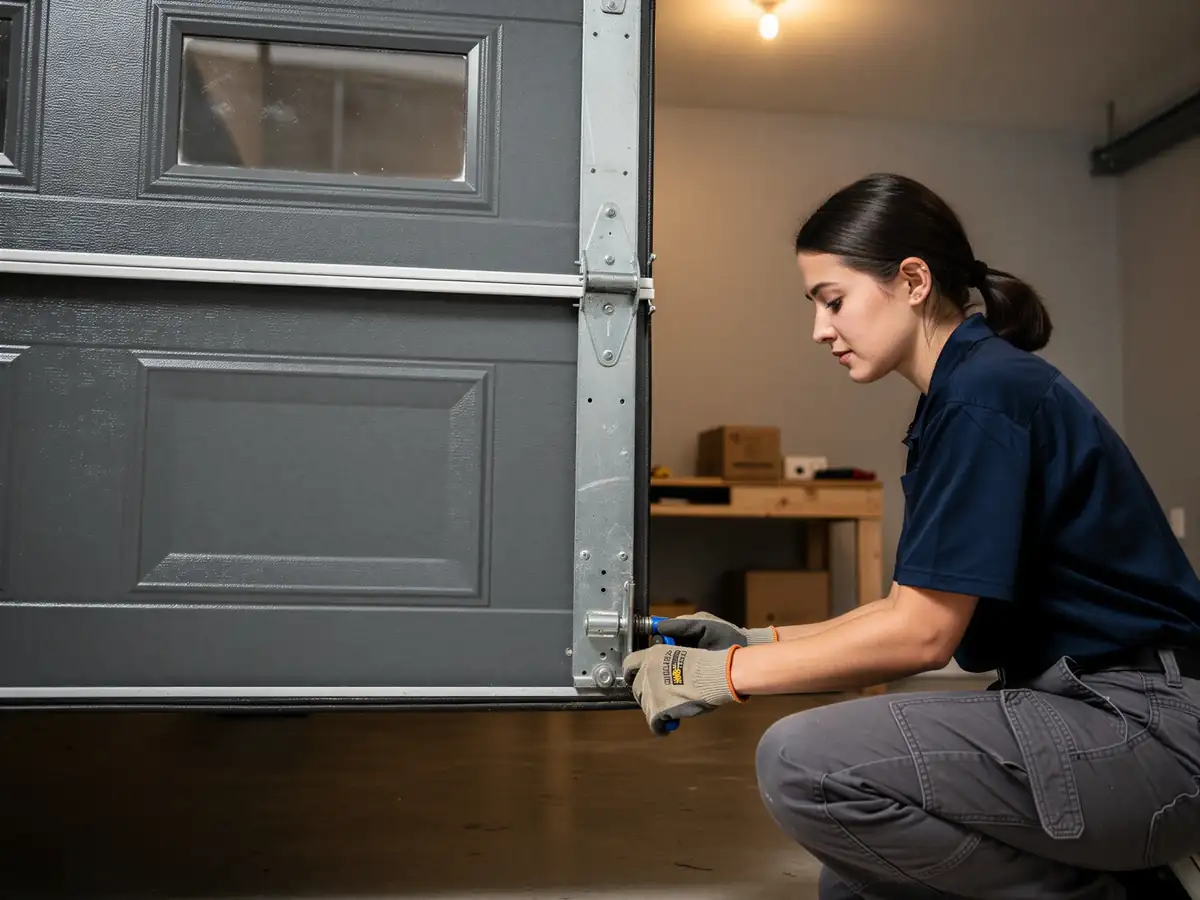
How We Fix It
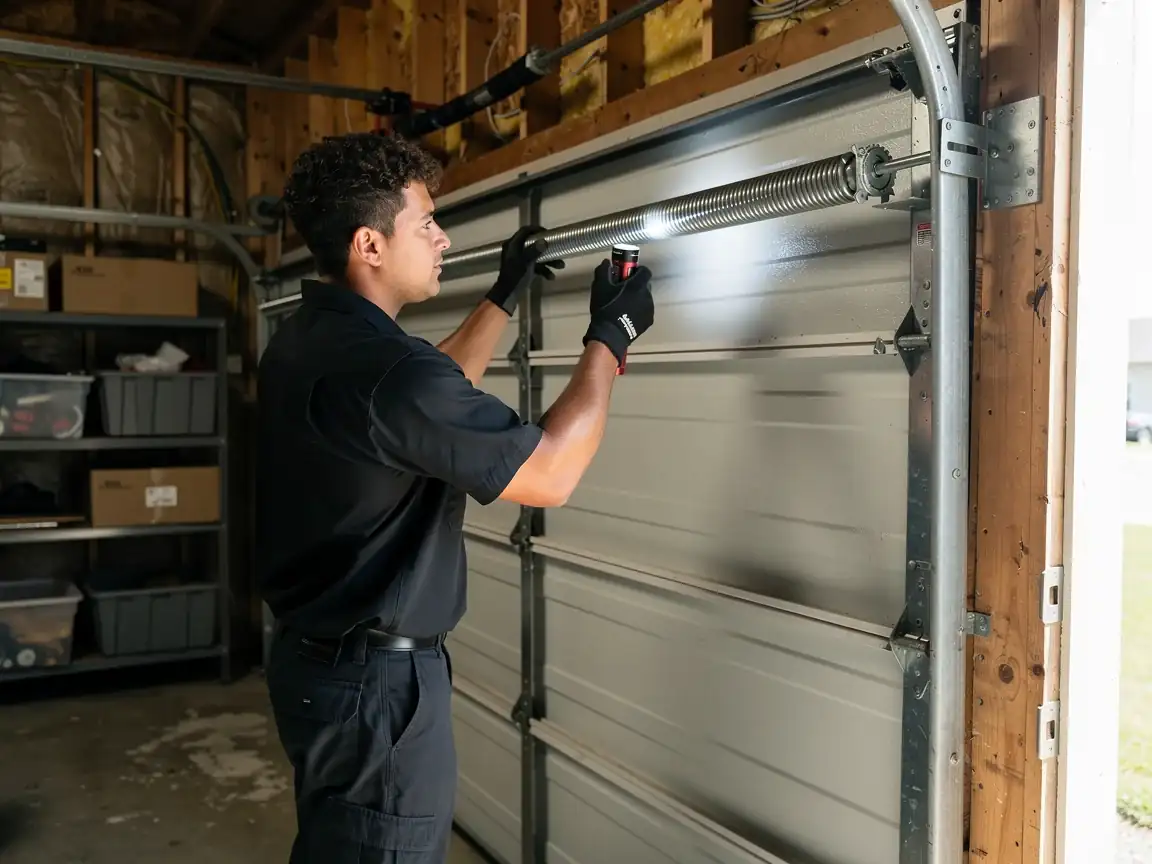
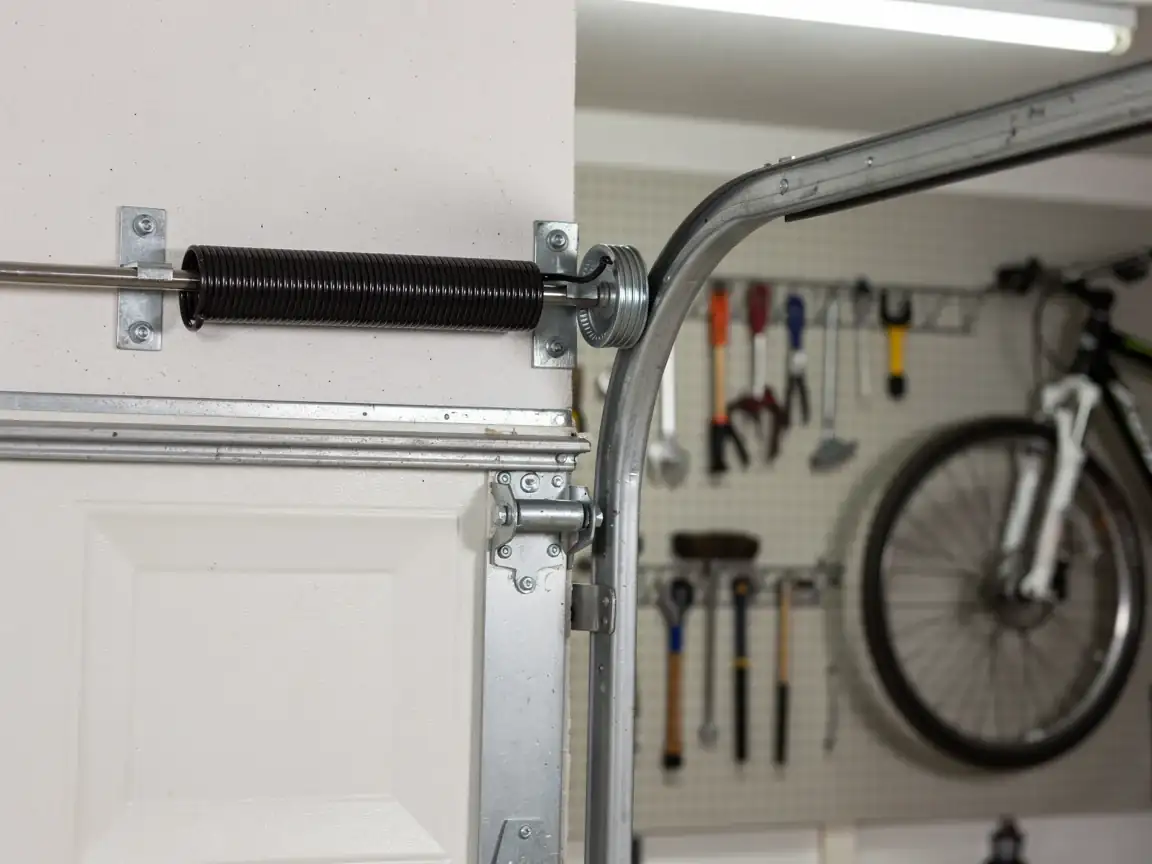
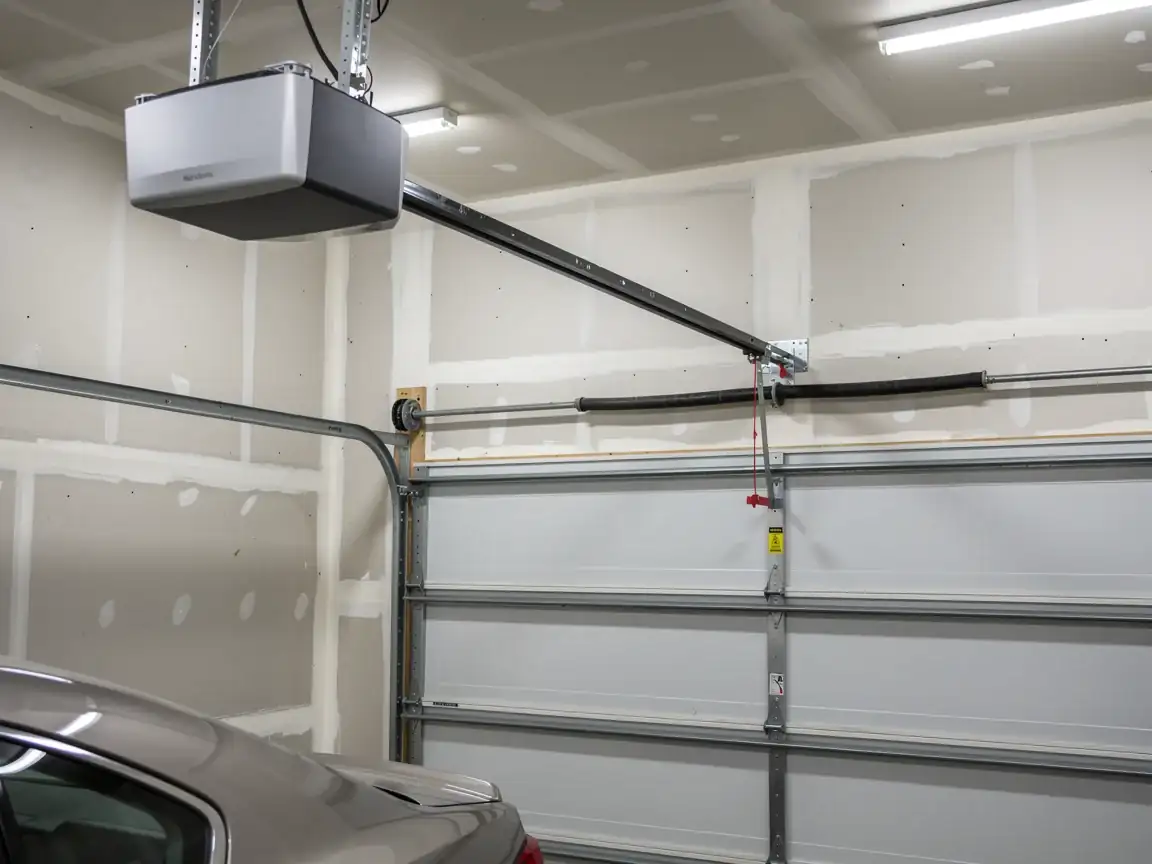
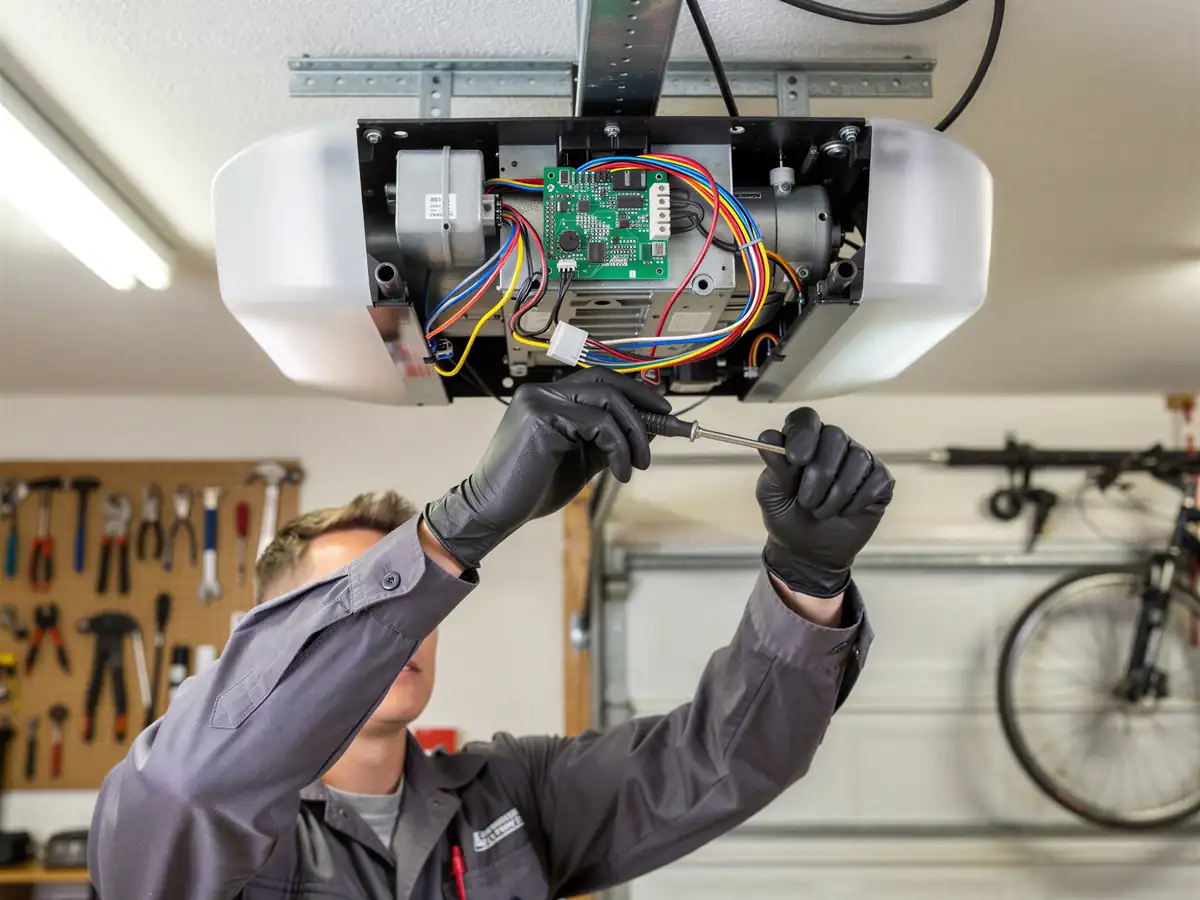
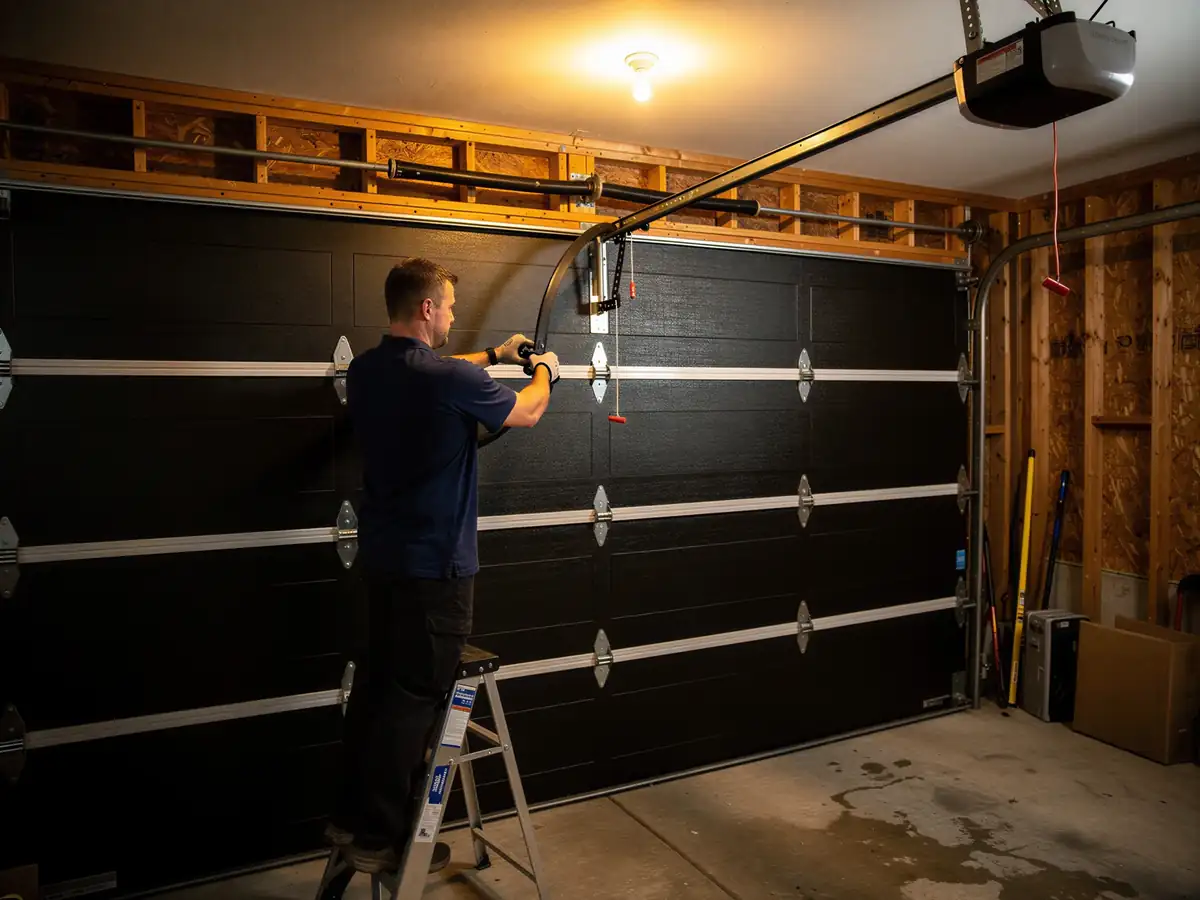
Most calls we take in Greensburg are one of three things: a torsion spring that snapped, a cable that frayed through, or an opener that's quit talking to the wall button. We pull the broken spring off the header bracket, match it to the door's weight and drum size, and wind in a replacement pair rated for that door - not a universal spring that's close enough. Cables get swapped in pairs even if only one failed, because the other one is the same age and about to go. For openers, we check the logic board, the drive gear, and the travel limits before we decide whether it's a part fix or a full unit swap.
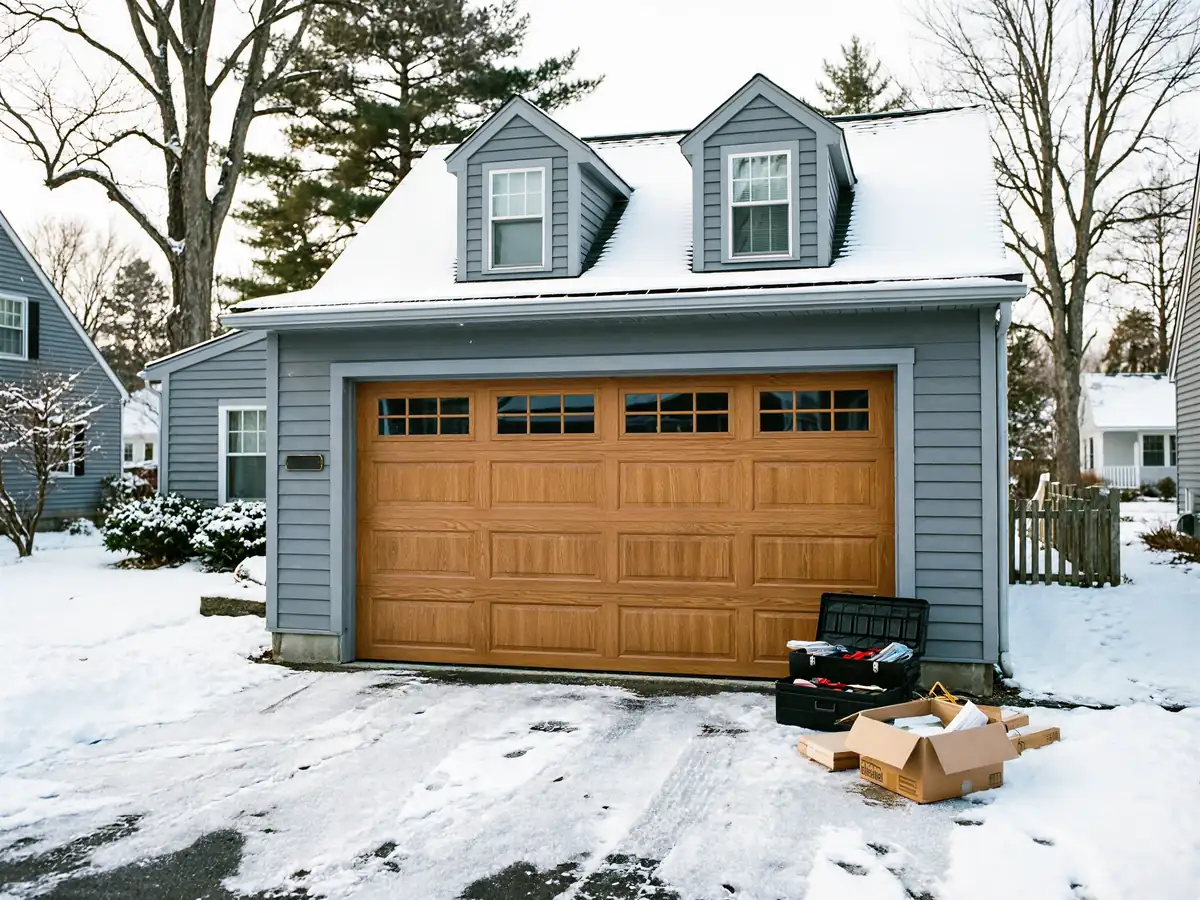
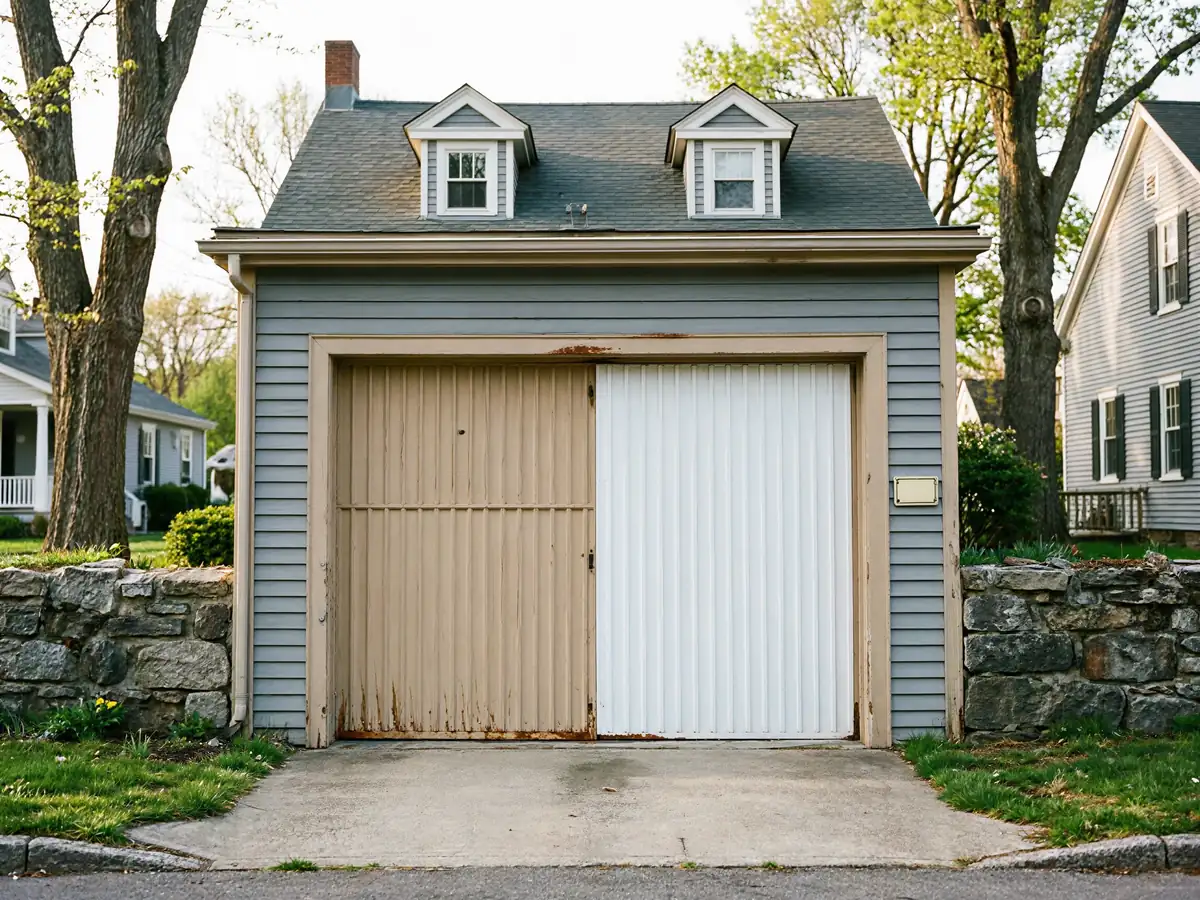
One honest limit: on some of the older one-piece doors still hanging in this area, the track hardware and panel sections were discontinued decades ago. If a panel is bent past straightening and we can't source a match, we'll tell you that up front instead of hunting for a part that doesn't exist anymore - at that point a new door section is the straighter path. You can see the rest of what we do from the home page.
What Causes It Around Here
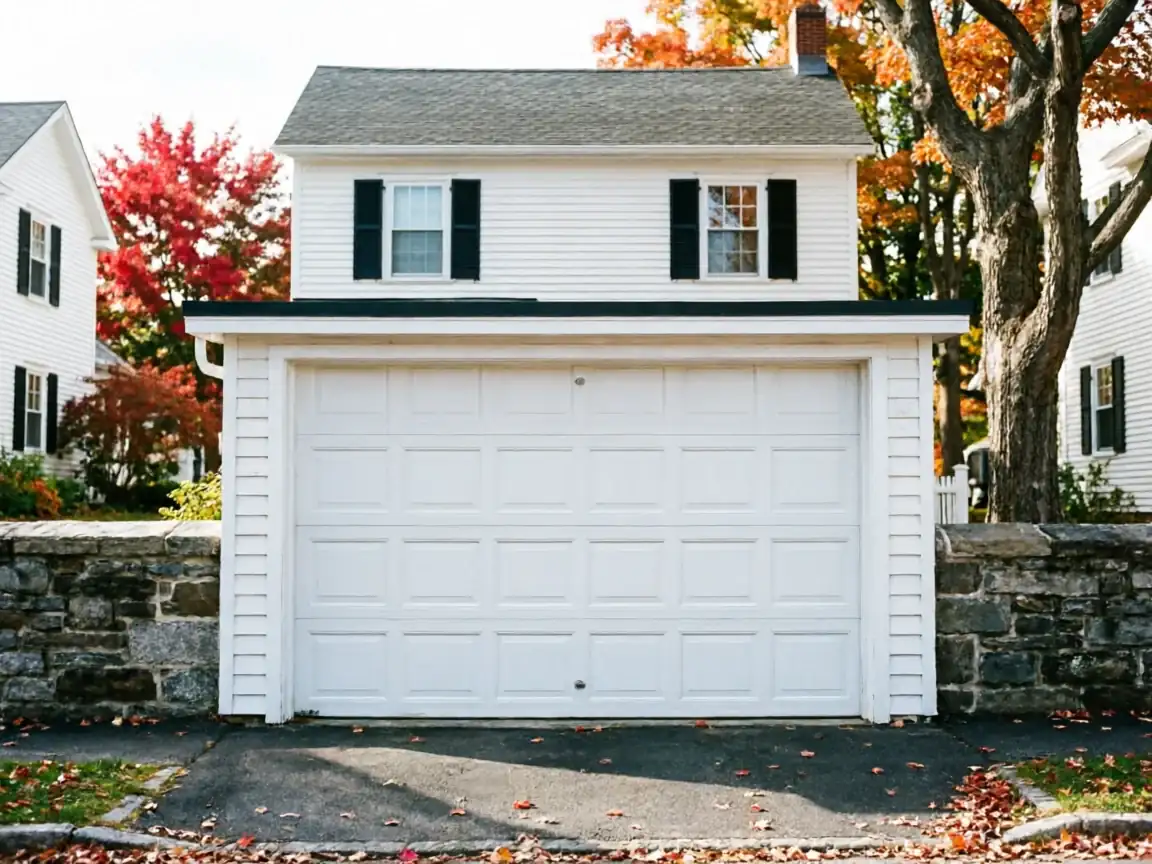
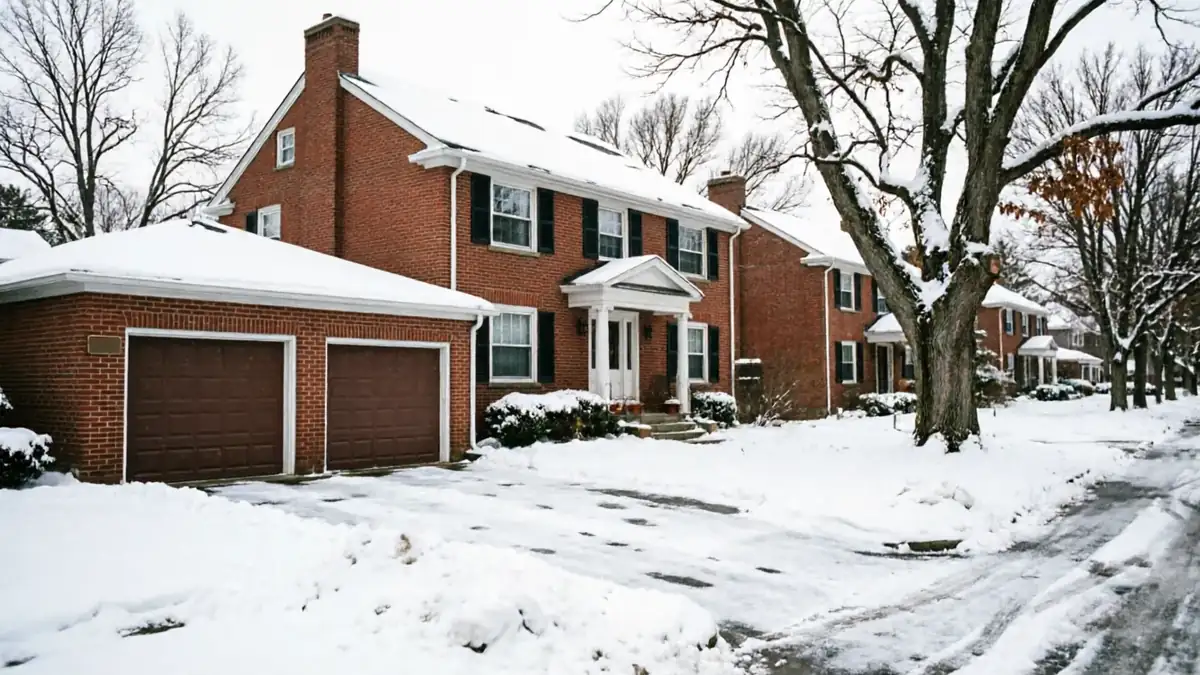
A lot of what we see traces back to when the house was built. Housing across this service area went up mostly between 1938 and 1985, with the median landing around 1950, and across the 53 named communities we work in, most of the stock predates 1960. That means a sizable share of the doors we touch are still running on the original torsion hardware, or a spring that was swapped once sometime in the 1980s and never again.
Steel fatigues with every open-close cycle, and cold makes it worse. Greensburg sits in a cold, severe climate band, and that swing from a mild fall day to a hard freeze is exactly what finishes off a spring that's already near the end of its cycle count. The metal contracts, the coil loses a little flexibility, and the next cold morning it lets go - usually with a bang loud enough to bring you into the garage at 6 a.m. Rollers and hinges on these older doors are often the original steel too, not nylon, so they rust and bind in freeze-thaw weather in a way newer hardware doesn't.
Doing It Yourself
Some of this is fine to handle yourself
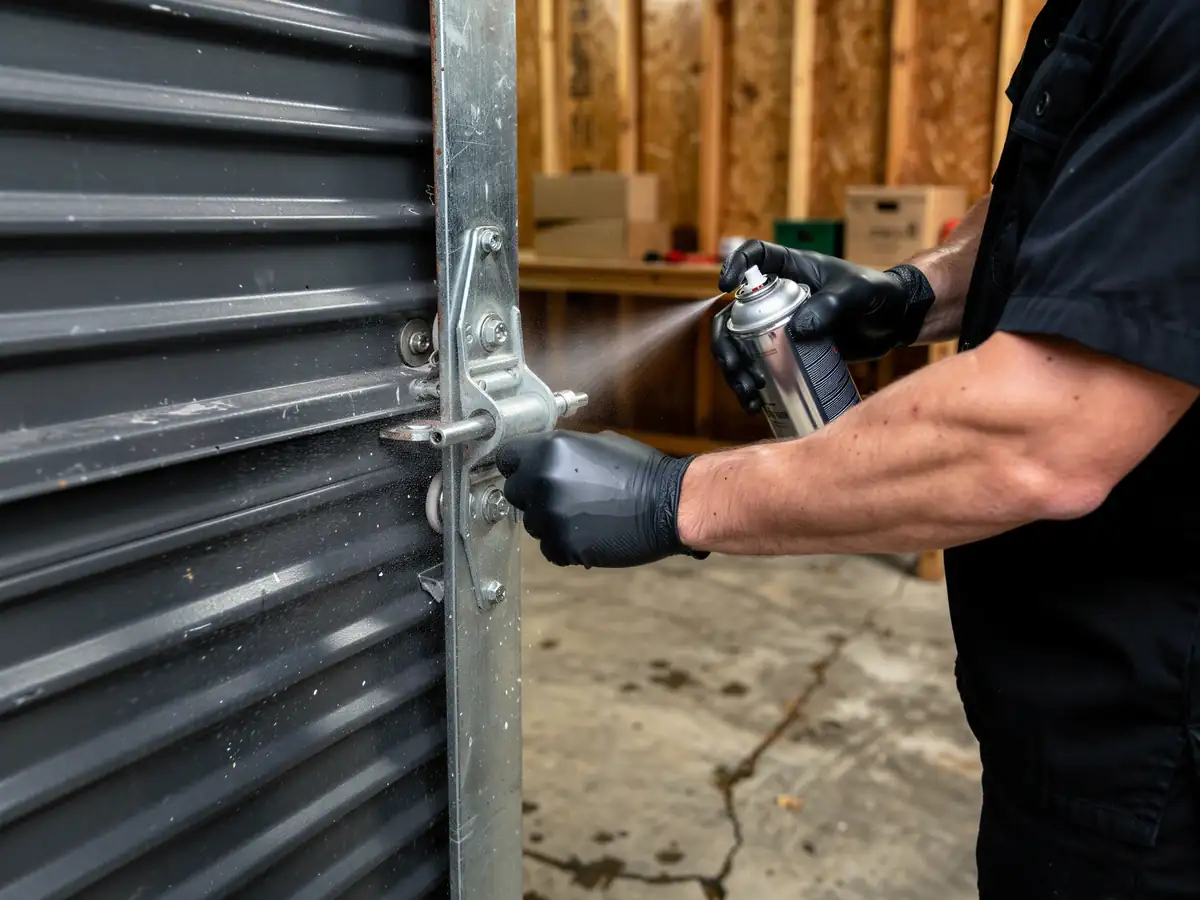
Lubricating the rollers, hinges, and the torsion shaft bearing plates with a garage-door-specific spray twice a year keeps things moving and costs you ten minutes. Checking that the track is bolted tight and that the door is still balanced - lift it halfway by hand with the opener disconnected and see if it holds - tells you a lot about whether a spring is weakening before it breaks outright.
What you should not do is touch the torsion spring itself
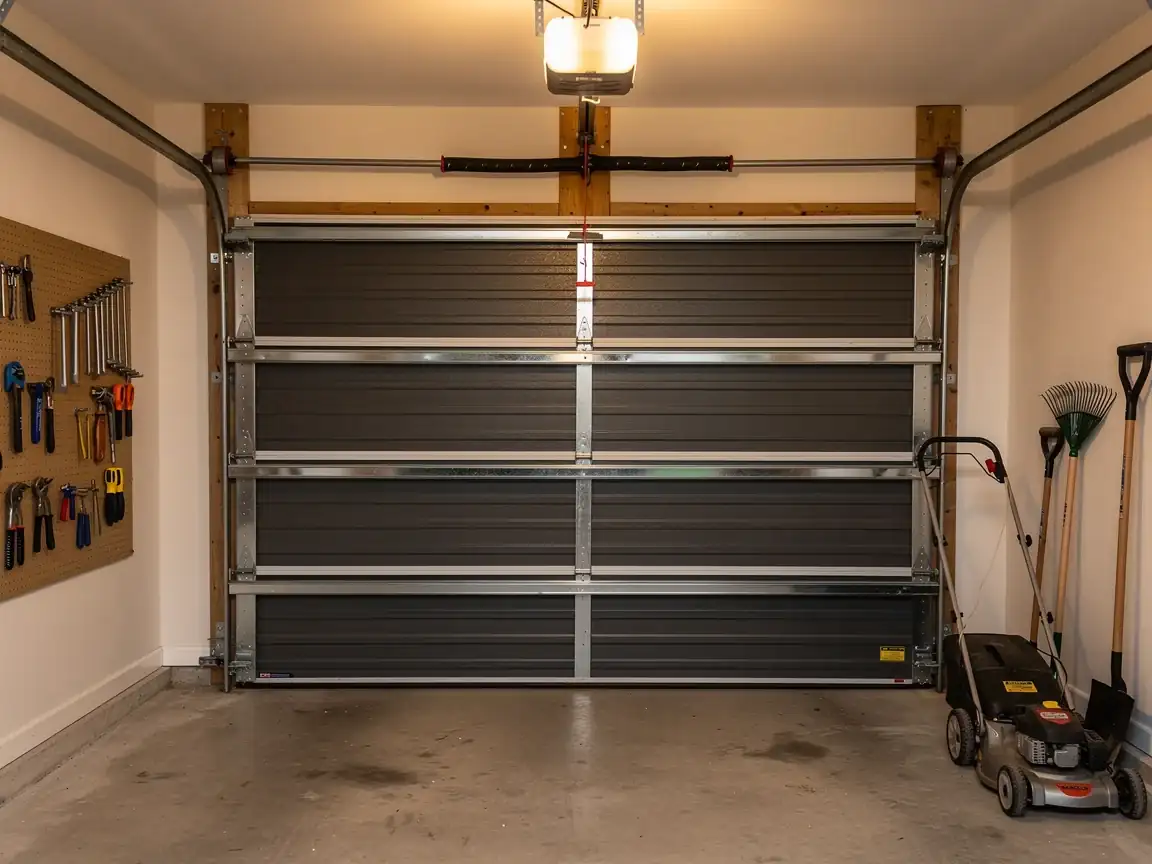
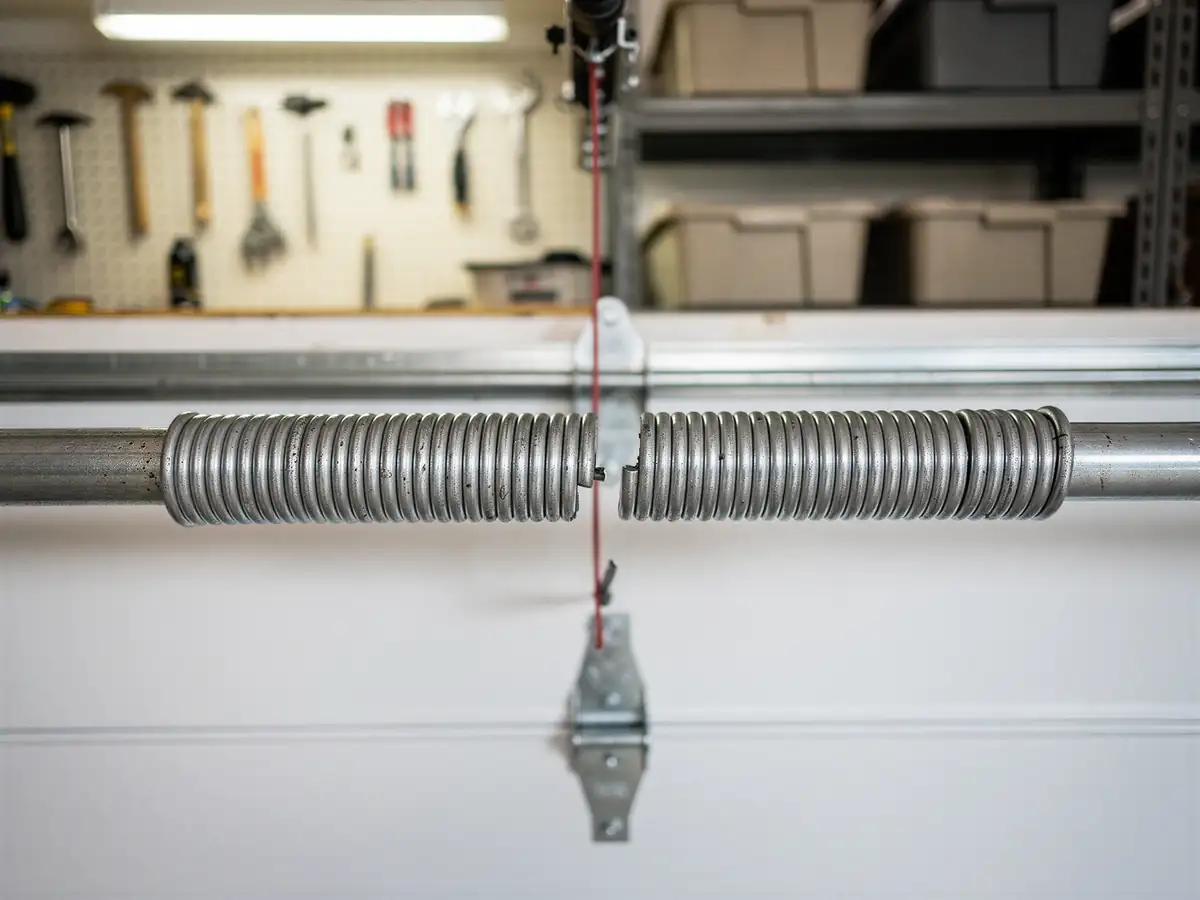
These are wound under several hundred pounds of tension, and the winding cones that hold that tension are not something to guess at with a pair of vise grips and a ladder. Every year people get hurt doing exactly that, and it's the one repair on this list where the tool matters as much as the knowledge - we use winding bars built for the job, not whatever's in the drawer. If your door is stuck down and you need it open to get a car out, you can usually disengage the opener with the red emergency release cord and lift manually, carefully, as a short-term fix until someone can get to the spring.
What You Are Seeing
If the door won't budge and you hear a loud bang from the garage beforehand, that's almost always a broken torsion spring - the sound is the coil letting go under tension. A door that opens partway and then stalls, or one where the opener motor runs but the door doesn't move, usually points to a snapped cable or a stripped drive gear inside the opener head rather than the spring.
A door that's noticeably heavier to lift by hand than it used to be, even before anything breaks, means a spring is losing tension gradually - worth fixing on your schedule instead of waiting for it to snap on a cold morning. Grinding or squealing from the track as the door moves is usually rusted or worn rollers, common on the original steel rollers still found on a lot of the pre-1960 housing stock in this area. And if the door reverses on its own partway down, the opener's safety sensors or limit settings are usually the culprit, not the springs at all.