How We Fix It
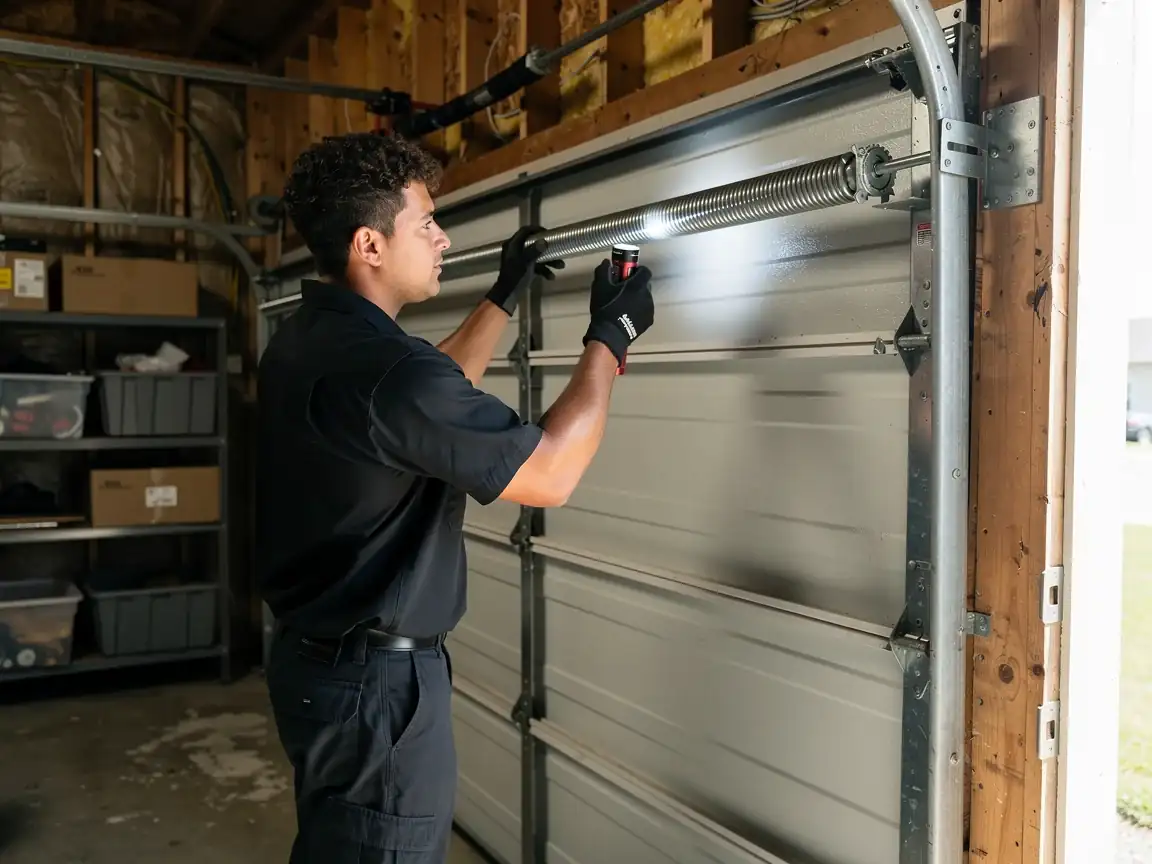
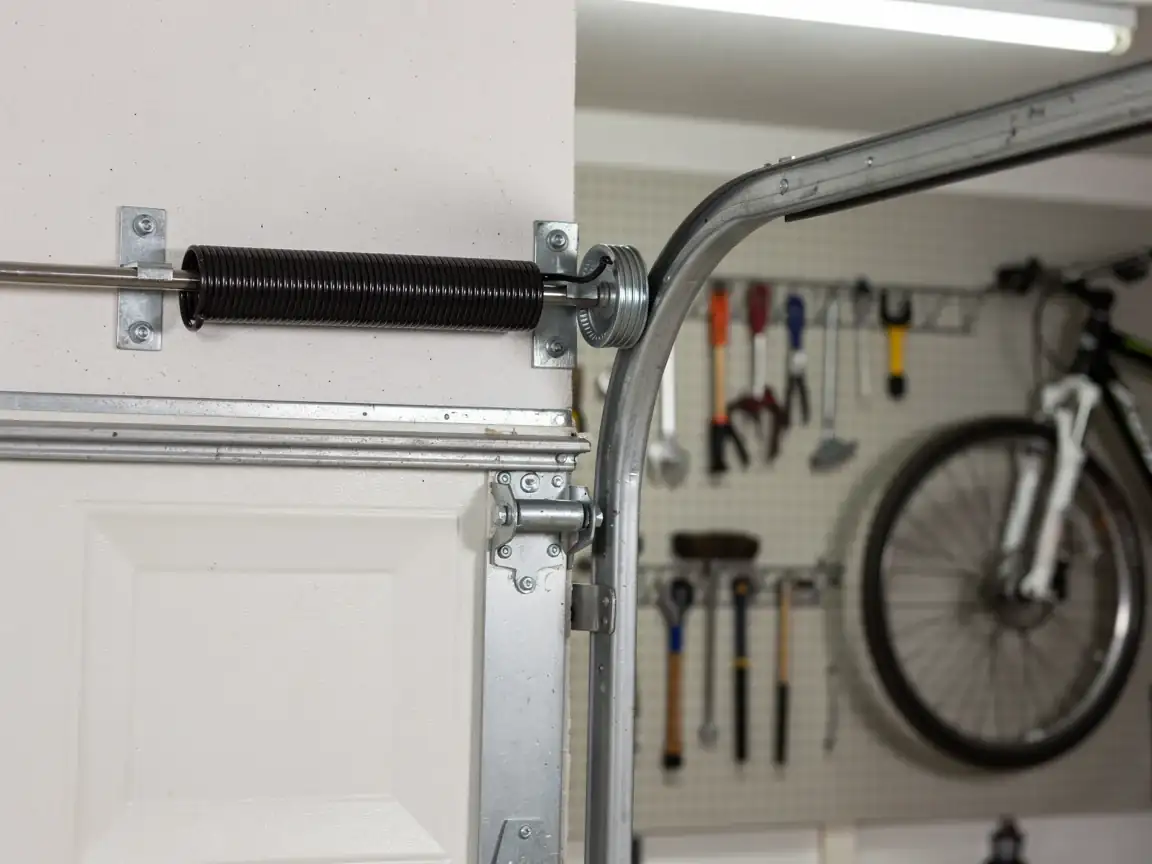
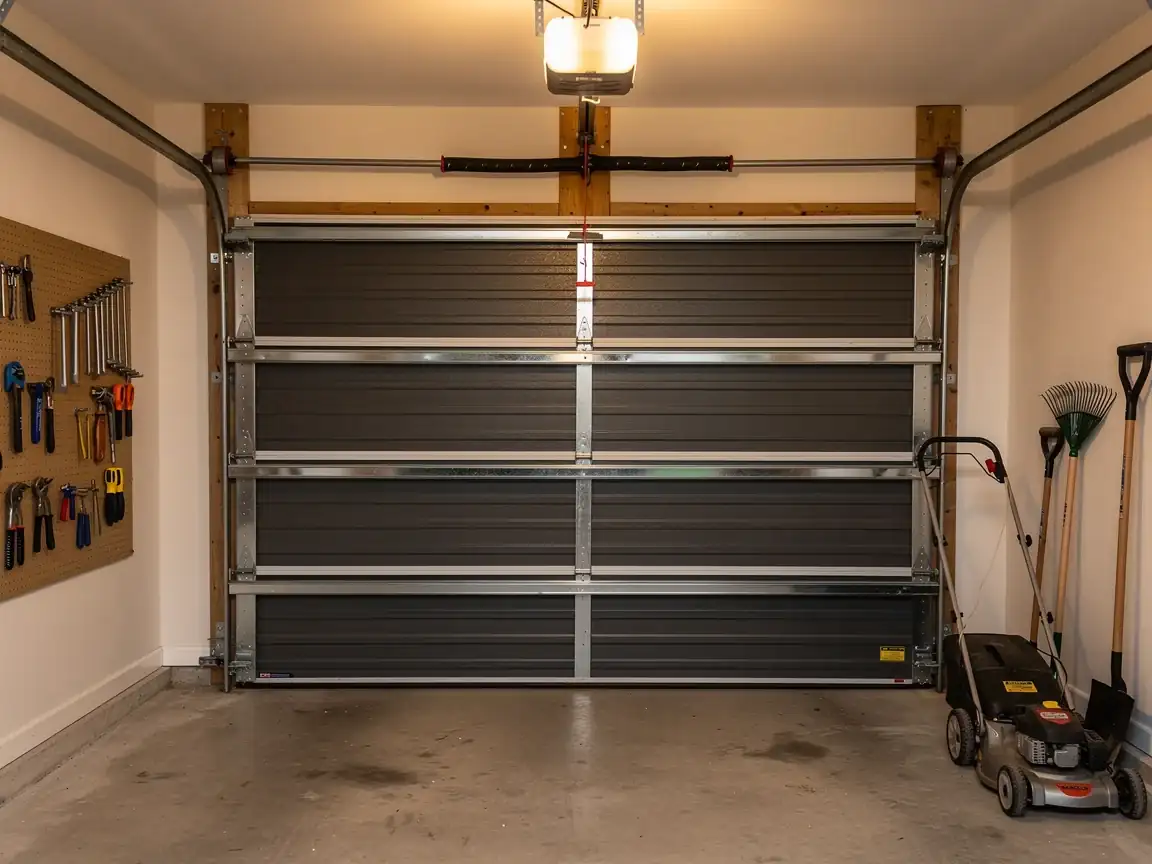
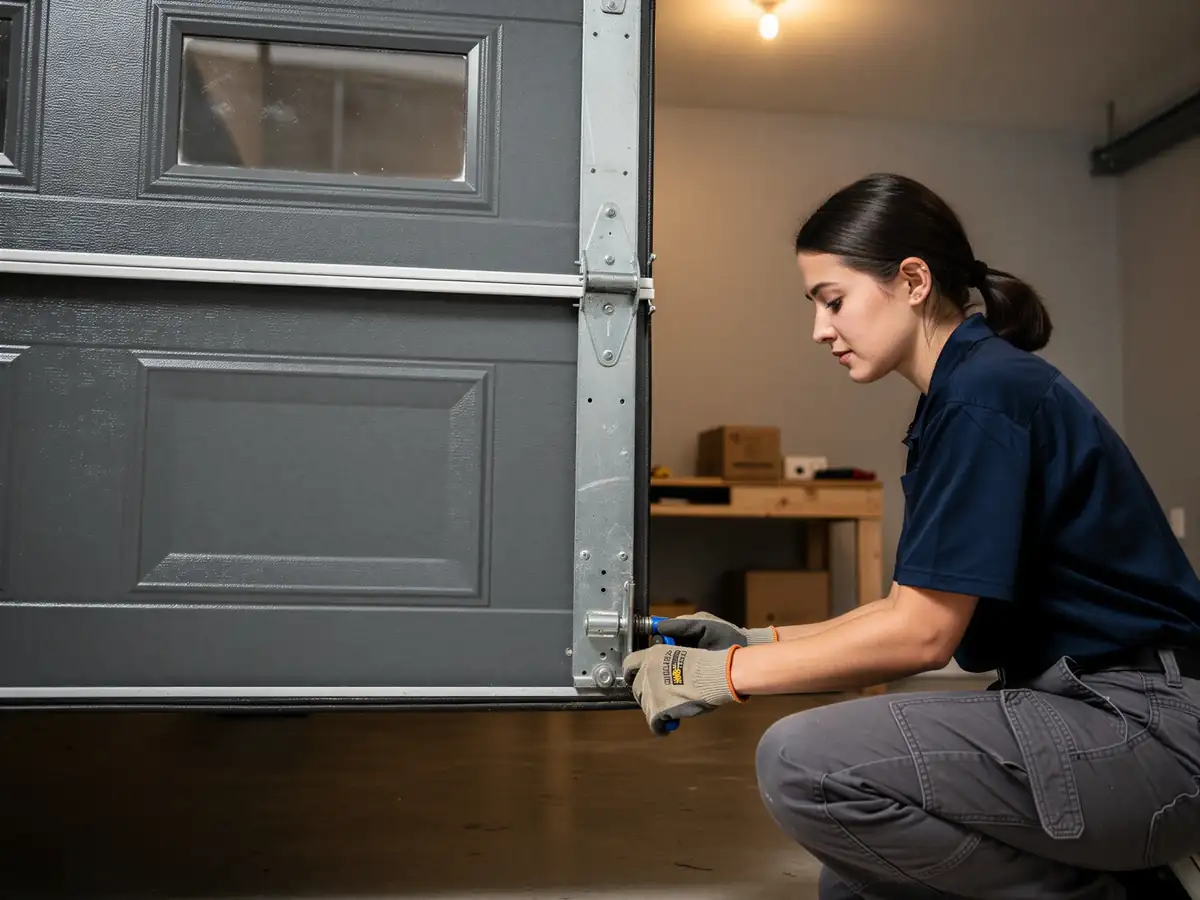
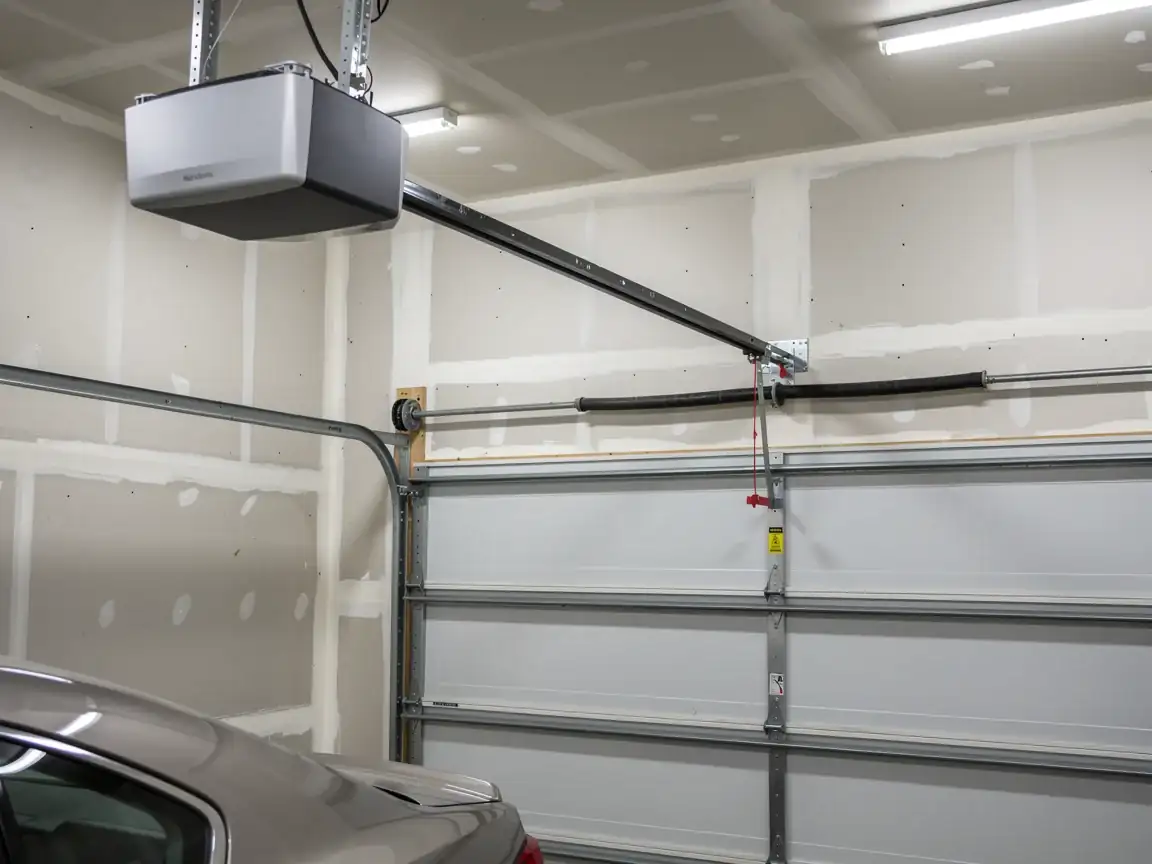
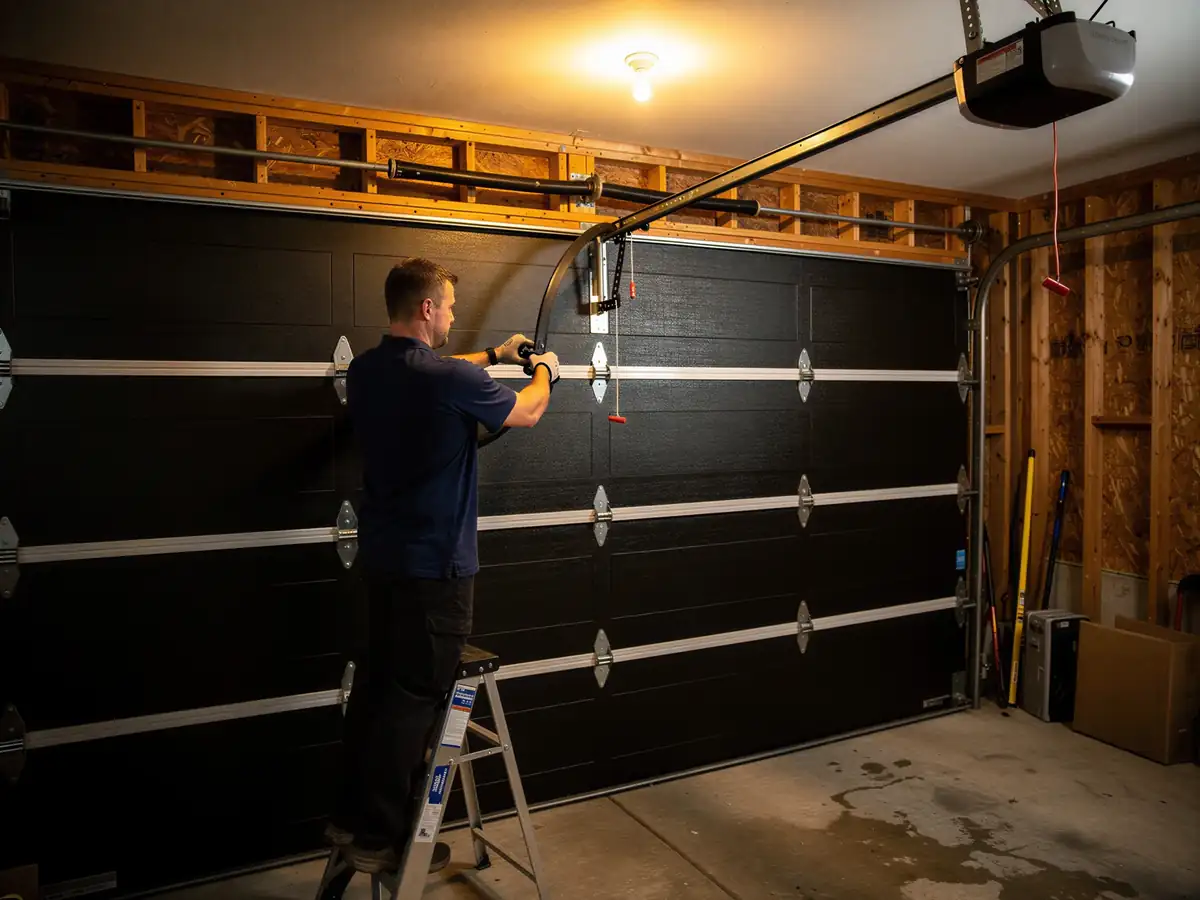
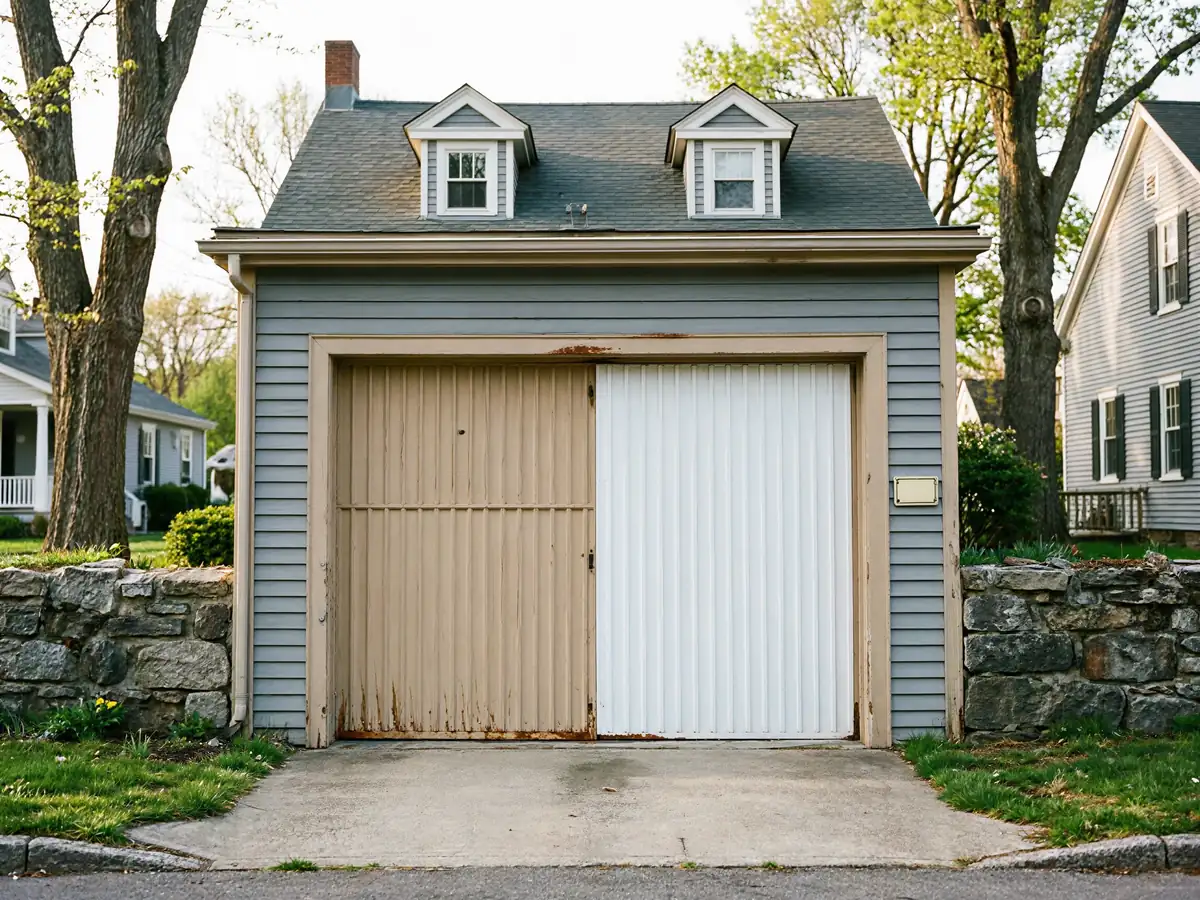
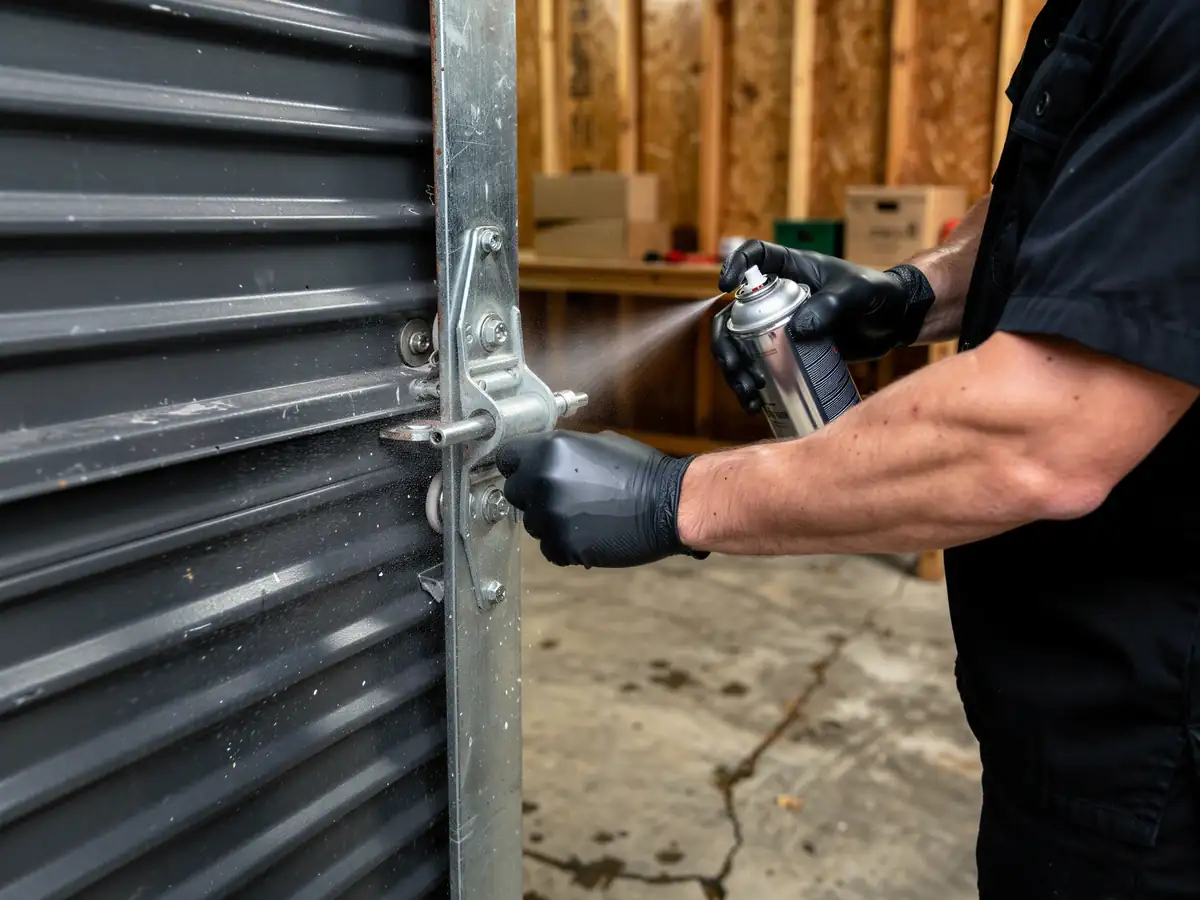
A broken torsion spring means the door won't lift, or it slams down when someone pulls the release. We don't patch a spring - we pull the matched pair, measure the wire gauge and wind count off the old ones, and set new springs to the door's actual weight. On the older one-piece and sectional doors common through this part of the service area, that often means side-mounted torsion hardware instead of the center-mounted shaft you'd find on anything built after the 1980s. Pulleys and extension systems need a different approach, and we see both out here depending on the decade a house went up.
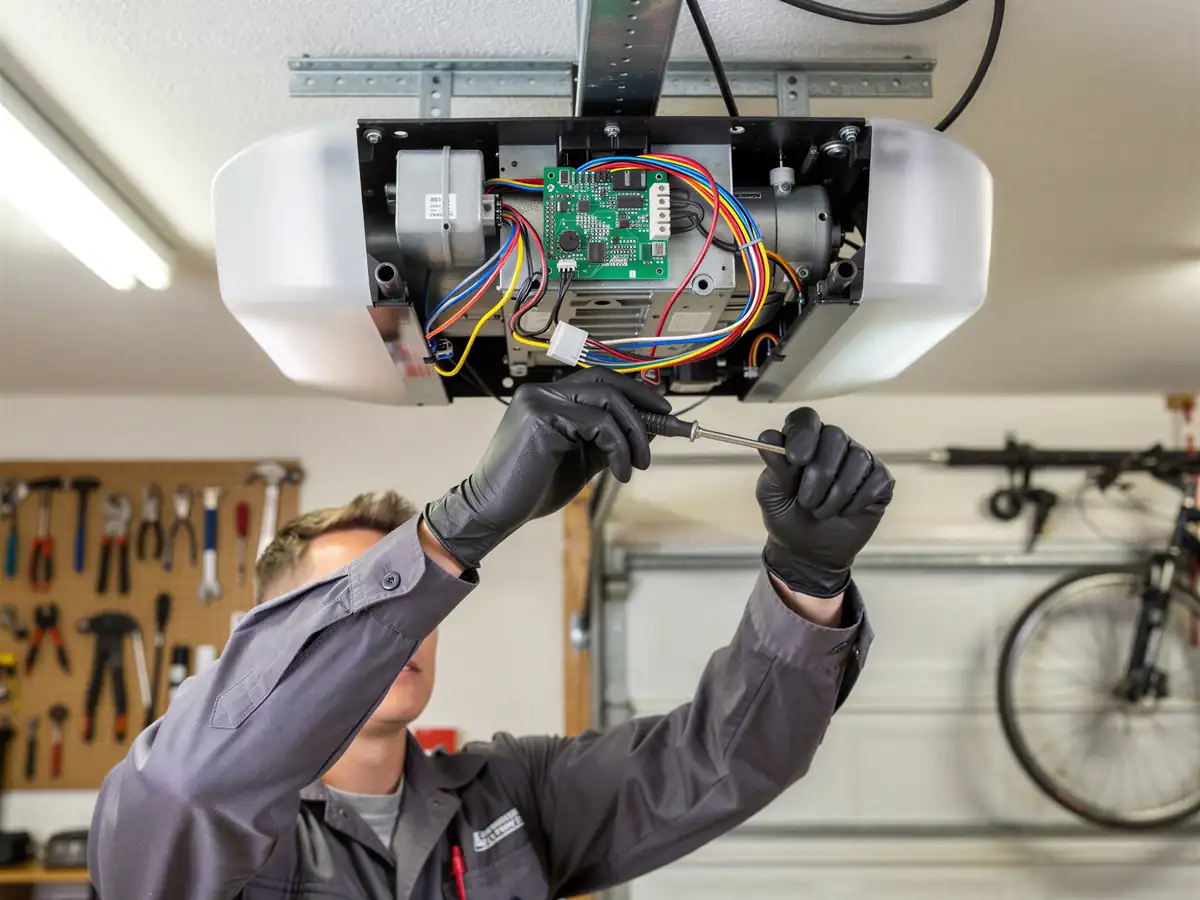
We check the cable, drums, and bearing plates at the same time, because a spring rarely fails alone - a seized bearing or a frayed cable put the extra strain on the spring in the first place. If the opener has been straining against a weak spring for months, we test it too; a motor that's been fighting dead weight wears out its gears faster than one lifting a properly balanced door.
One limit worth saying plainly: if the torsion tube or the drums are bent from the spring letting go violently, that's a parts-and-labor job beyond a spring swap, and we'll tell you that before we start, not after.
What Causes It Around Here
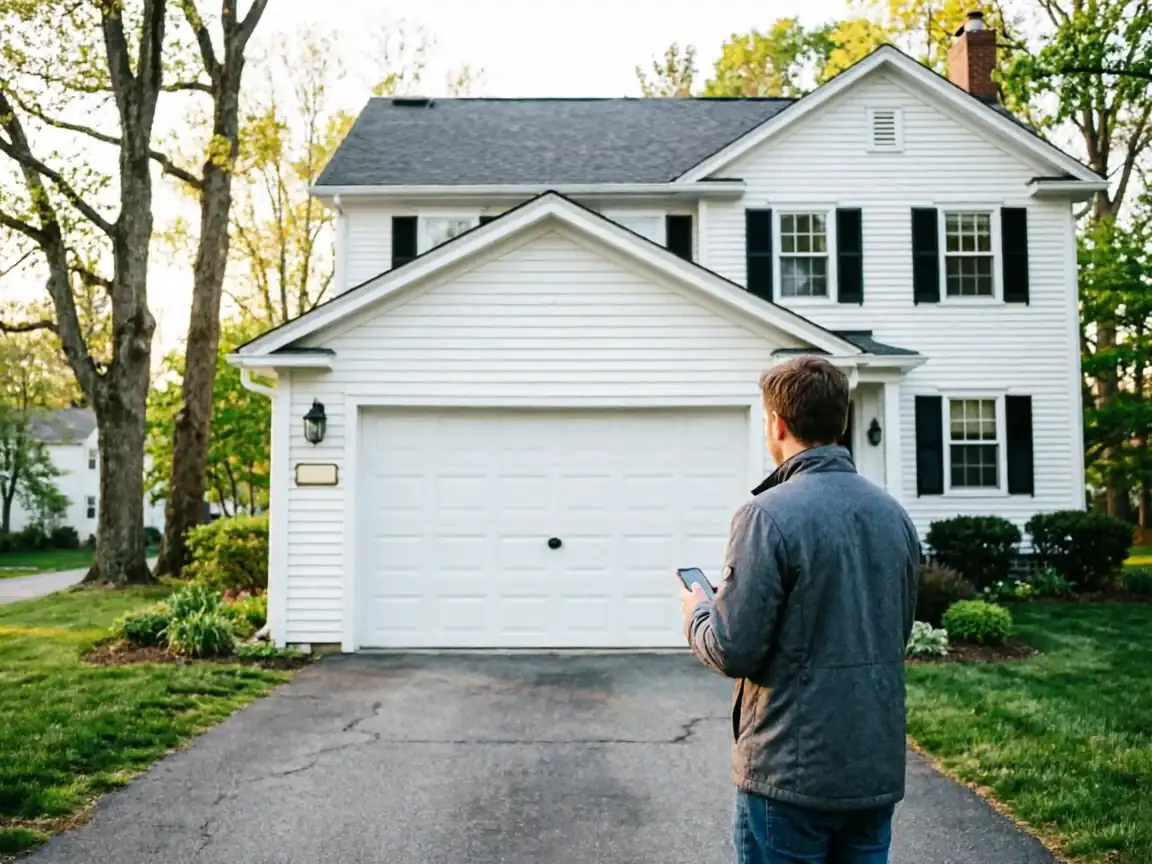
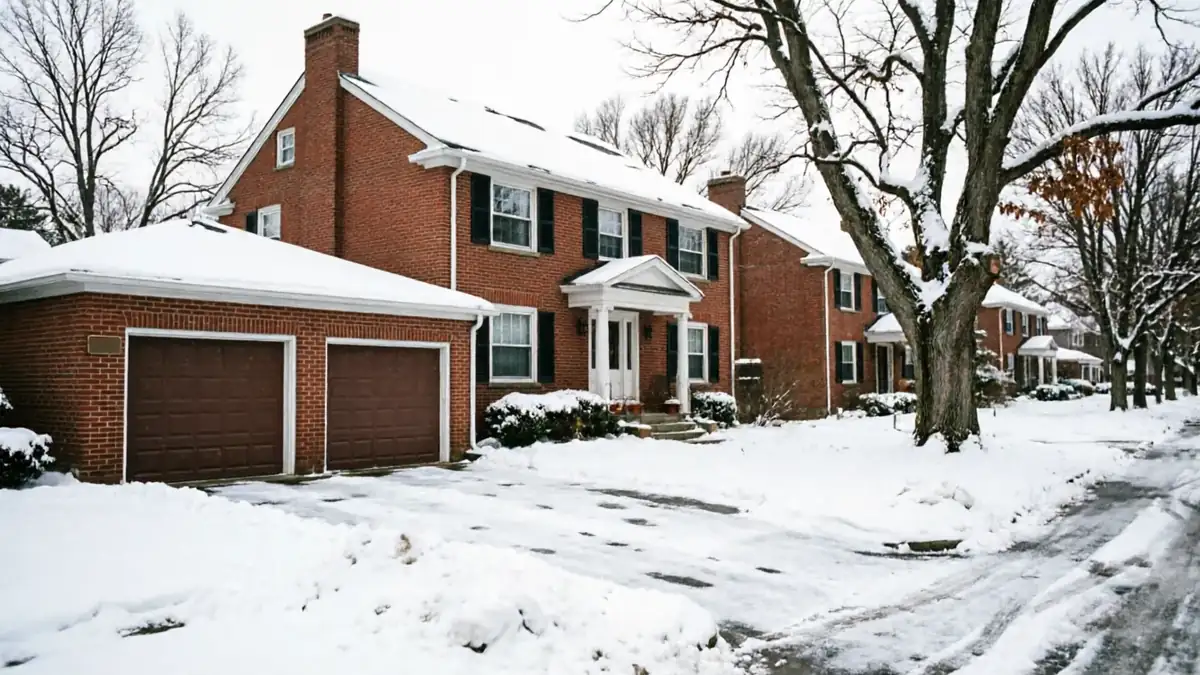
Most of the houses in and around Greensburg were built between 1938 and 1985, with a lot of that stock going up around 1950 - and across the 53 named areas we cover, the pattern holds: pre-1960 construction is the rule, not the exception. Garage doors and spring hardware from that era weren't built for 70-plus years of service, and a lot of what's hanging in these garages is a replacement from decades ago, not the original - meaning the spring itself may already be older than the homeowner realizes.
The bigger factor is the climate band this region sits in: cold and severe. Steel spring wire contracts in freezing temperatures and loses a measure of flex it has at 70 degrees. A spring that's been stretching and relaxing through 30-plus winters of that cycle is a spring that's closer to metal fatigue than its rated cycle count suggests. Add a garage that isn't insulated - common in houses from the 1950s era - and the swings are sharper, the metal works harder, and the failure comes sooner than the spec sheet promised.
We see this across the full service area, not just one street or one neighborhood - the housing age and the winters are regional, not local to any single block.
Doing It Yourself
We'll say this straight: don't do a torsion spring yourself
A wound torsion spring holds enough stored force to break a wrist or worse, and the winding bars and clamps that make it safe aren't things most garages have lying around. Extension springs are lower-risk but still under real tension, and if you get the safety cable wrong, the spring can still whip when it lets go.
What you can safely check yourself
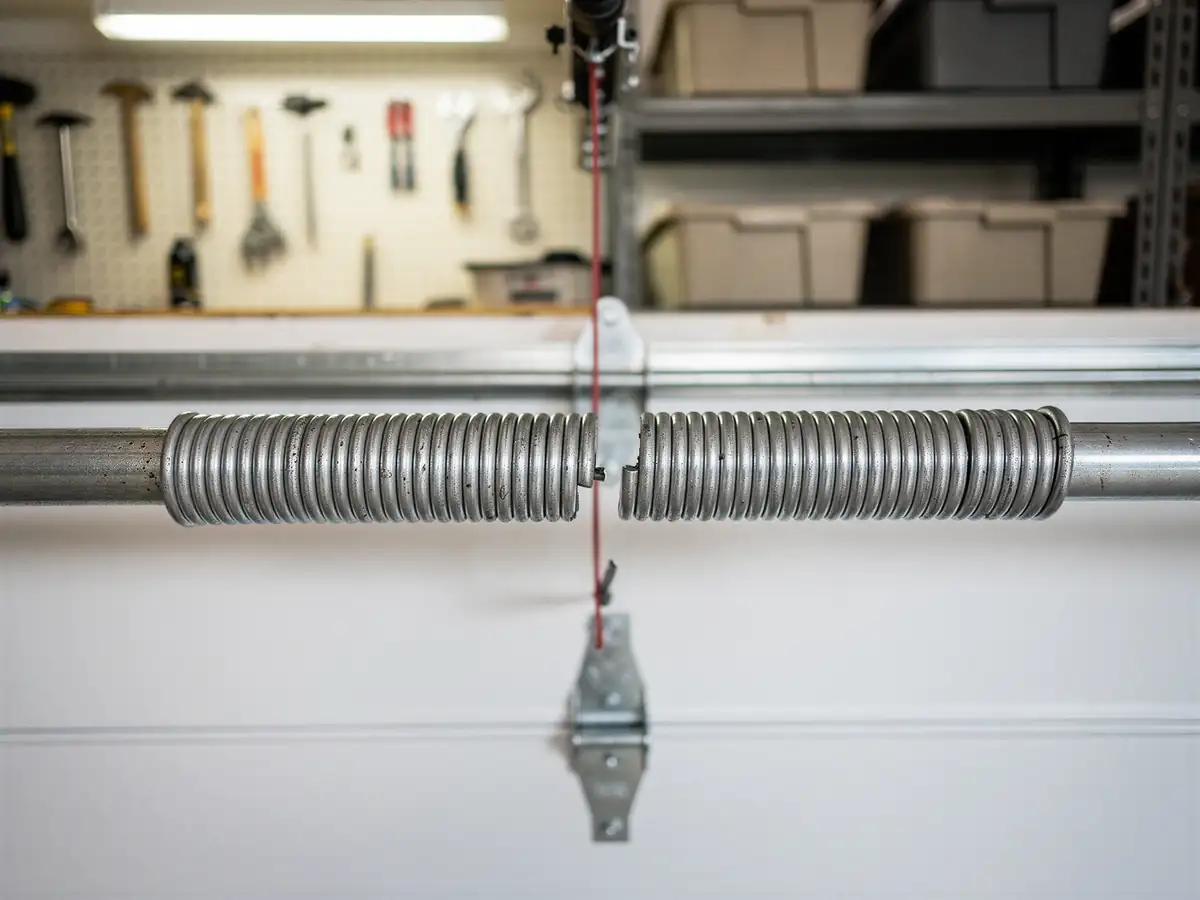
Look at the spring for a visible gap in the coil - that's a clean break and means the door needs a service call, not troubleshooting. Listen for a loud bang from the garage; that's almost always the spring letting go, usually when the door is down and nobody's near it. You can also check whether the door feels unusually heavy when you lift it manually with the opener disconnected - if it drops fast or won't stay up at all, that's a spring problem, not an opener problem.
Don't try to adjust or rewind an existing spring
And don't bridge the gap with a bungee cord or clamp to get one more use out of the door before a tech comes. That's a short trip to a bent track or a dropped door.
What You Are Seeing
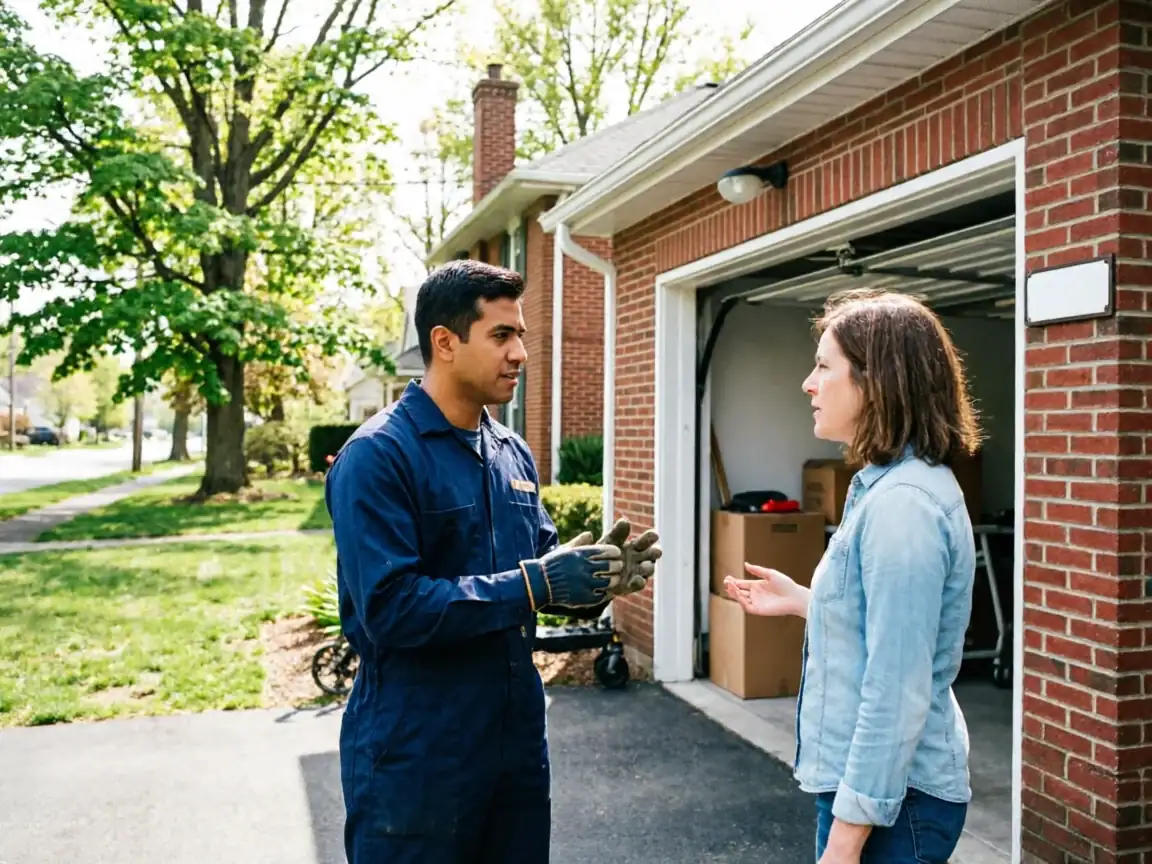
The usual signs: the door won't budge, or it moves a few inches and stops. Sometimes it's the opposite - the opener strains, grinds, and runs longer than it used to before the door finally lifts, a sign the spring is weakening but hasn't fully failed. A loud bang from the garage, often in colder weather, is almost always a spring breaking under tension.
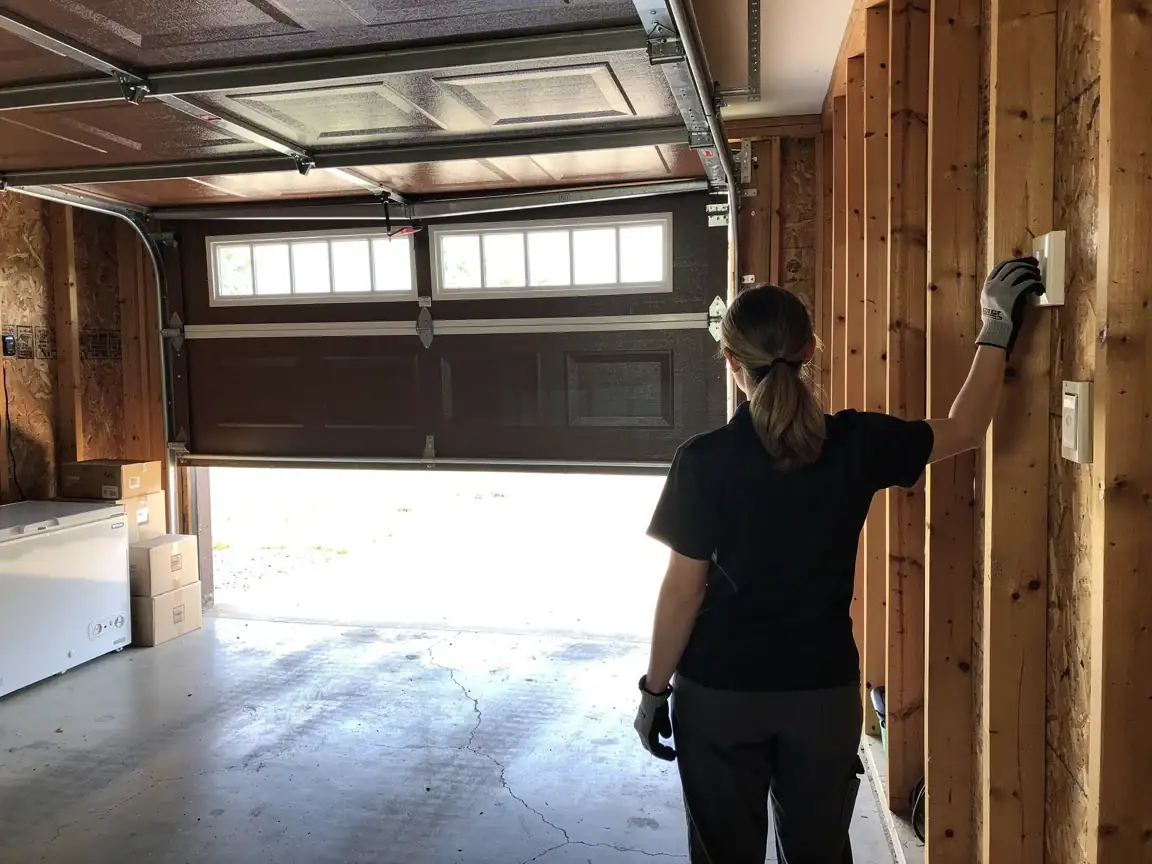
You might also notice the door is crooked when it's partway open - one side higher than the other - which usually means one spring broke while its twin held, common on double doors with two torsion springs. If the door has gotten noticeably heavier to lift by hand over the past few months, that's gradual spring fatigue rather than a sudden break, and it's worth a call before it happens the hard way, usually on the coldest morning of the year.
Across the households we work with in this area - a region of roughly 83,000 households with a majority owning rather than renting - the door hardware tends to track the age of the house, so a spring complaint on an older home is rarely an isolated issue; it's usually one piece of hardware among several nearing the end of its working life.