How Local Conditions Play In
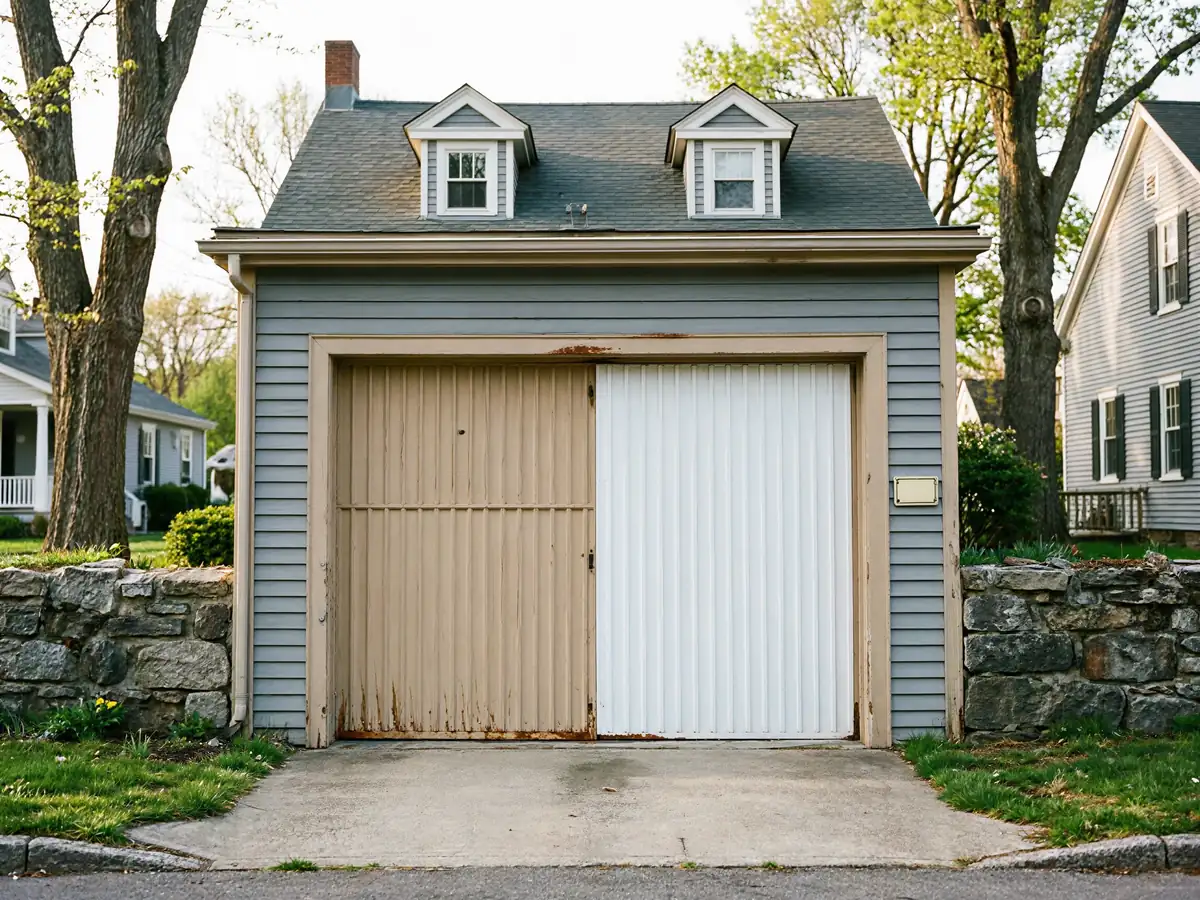
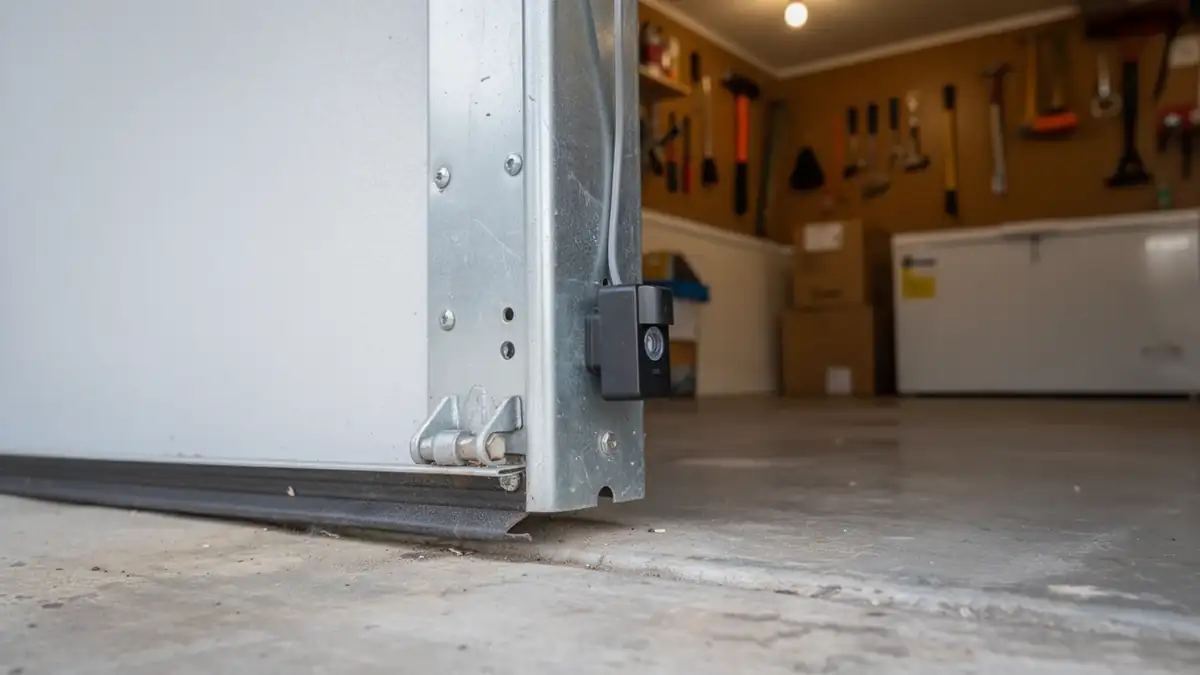
Most of the housing stock around here went up between 1938 and 1985, with a lot of it dating to right around 1950. Garage door openers weren't standard equipment on houses from that era - they got added later, which means the two photo-eye sensors near the floor were bolted onto framing and slab that predate them by decades. That retrofit setup is already working against square alignment before winter even shows up.
Then the cold gets involved. This area sits in a severe cold climate band, and a concrete slab that freezes and thaws through the season doesn't move as one piece. One side of the garage floor can heave or settle a fraction of an inch relative to the other, and that's enough to tip a sensor bracket out of the beam path. Nothing broke. Nothing got bumped. The slab just moved under it.
This is why the same complaint shows up across the roughly 53 mostly pre-1960 neighborhoods in this service area: a door that worked fine in August and starts blinking or refusing to close by November. It's not a seasonal coincidence - it's the ground actually shifting under 70-plus-year-old foundations.
When Waiting Is Fine
If your door still closes and the opener light just blinks a few times before it does, you can usually live with that for a while. It's annoying, not dangerous - the sensors are doing their job by refusing to commit until the beam reads clean both ways.
If the door closes every time without the usual pause-and-reverse behavior, you also don't need to call anyone. A sensor that's slightly out of true but still reading the beam is not an emergency.
Where waiting stops being fine: if the door closes on something in its path without reversing. If you don't know whether your sensors work, don't wait to find out by testing it with your foot. Older openers on this housing stock sometimes have sensors that were added as an afterthought and wired loosely enough that a slight bump disables them rather than just misaligning them - and a disabled sensor won't blink a warning at you.
What Most People Get Wrong
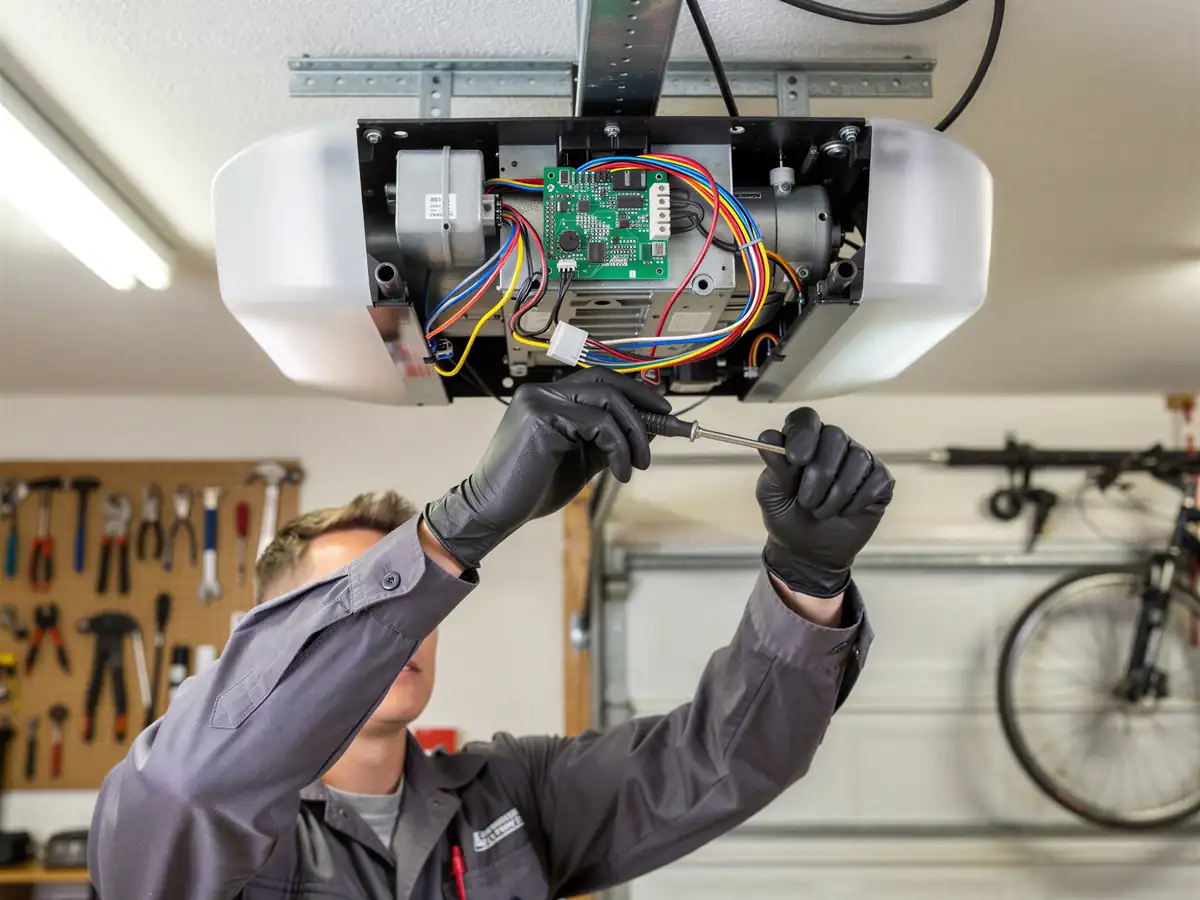
People assume a blinking opener light means a dead sensor and replace the whole unit
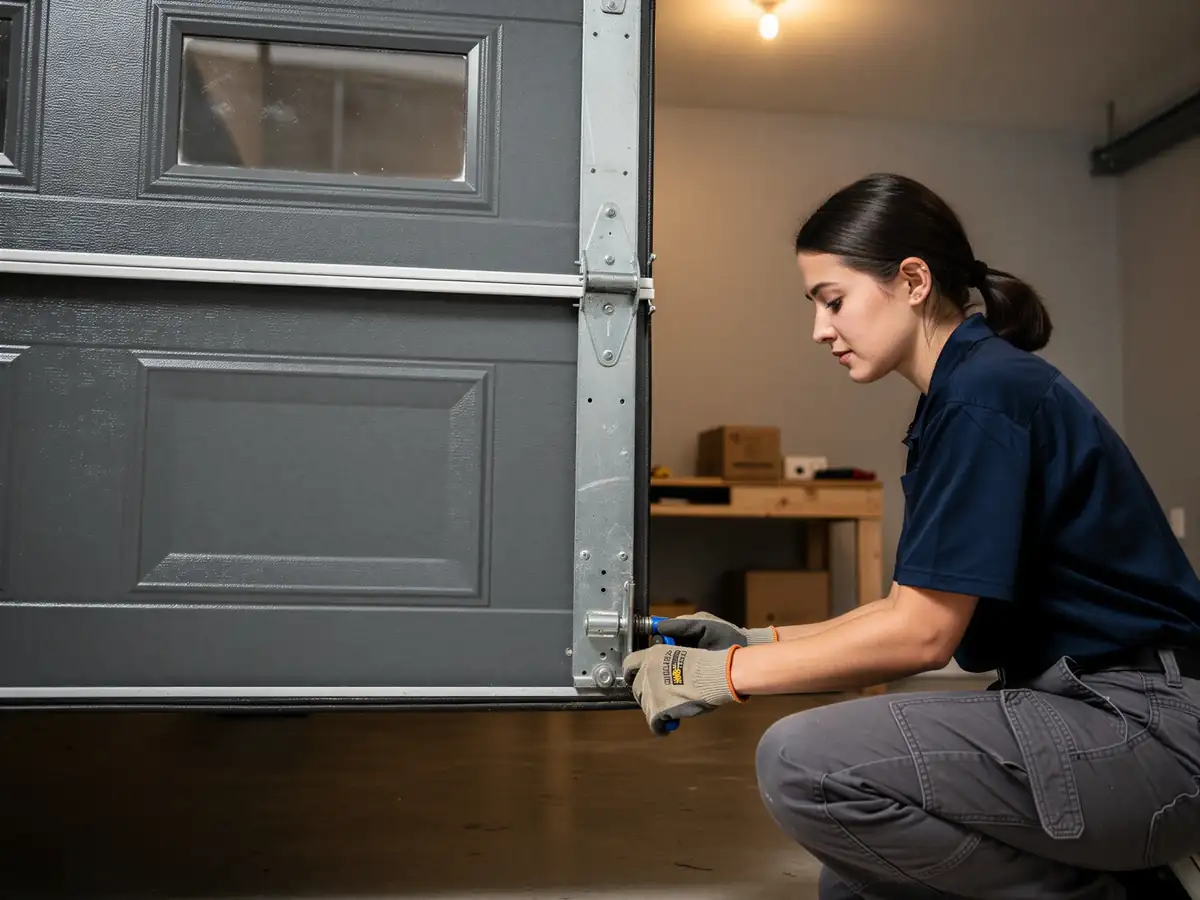
Most of the time here it's alignment, not electronics - because of the slab movement issue, the fix is loosening the wing-nut or bracket screw, nudging one sensor a hair, and tightening it back down. That's a five-minute job, not a parts order.
The other mistake: treating a realigned sensor as permanently fixed
On a house built in the 1940s or 50s with a slab that's spent 70-plus winters freezing and thawing, the alignment can drift again next winter. It's not a one-time repair so much as a seasonal check, same as you'd check anything else that sits on an aging foundation.
We'll tell you straight if we can't promise a permanent fix
A slab that's genuinely uneven, not just frost-shifted, is a foundation problem, and no amount of sensor adjustment solves that. In those cases the honest answer is to re-anchor the brackets to something more stable than the slab edge, not to keep re-aiming the same mounts every January.
The Situation
Across the households this company serves, the owner-occupied share of the housing stock is substantial, and a lot of those garages are original to houses built well before garage door automation was common. That combination - old structure, newer opener, sensors as an add-on - is the root of most of the drift calls we get, not a defective part.
If your sensors are chronically misaligning every cold season, the fix worth doing once is re-mounting the brackets to the door track or a fixed stud rather than the slab-adjacent wall, so the frame that moves with frost heave isn't the same frame the sensors are anchored to. That's a real repair, not a Band-Aid, and it holds up through the freeze-thaw cycle instead of needing a reset every November.