How Long It Takes
Manor is seven miles out from our shop in Greensburg, which puts it on the closer end of the thirty-some communities we cover. That matters less for how long a tune-up takes once the truck is in the driveway and more for how the call gets scheduled - a seven-mile run means we can usually slot Manor jobs between stops without the day getting eaten by the drive.
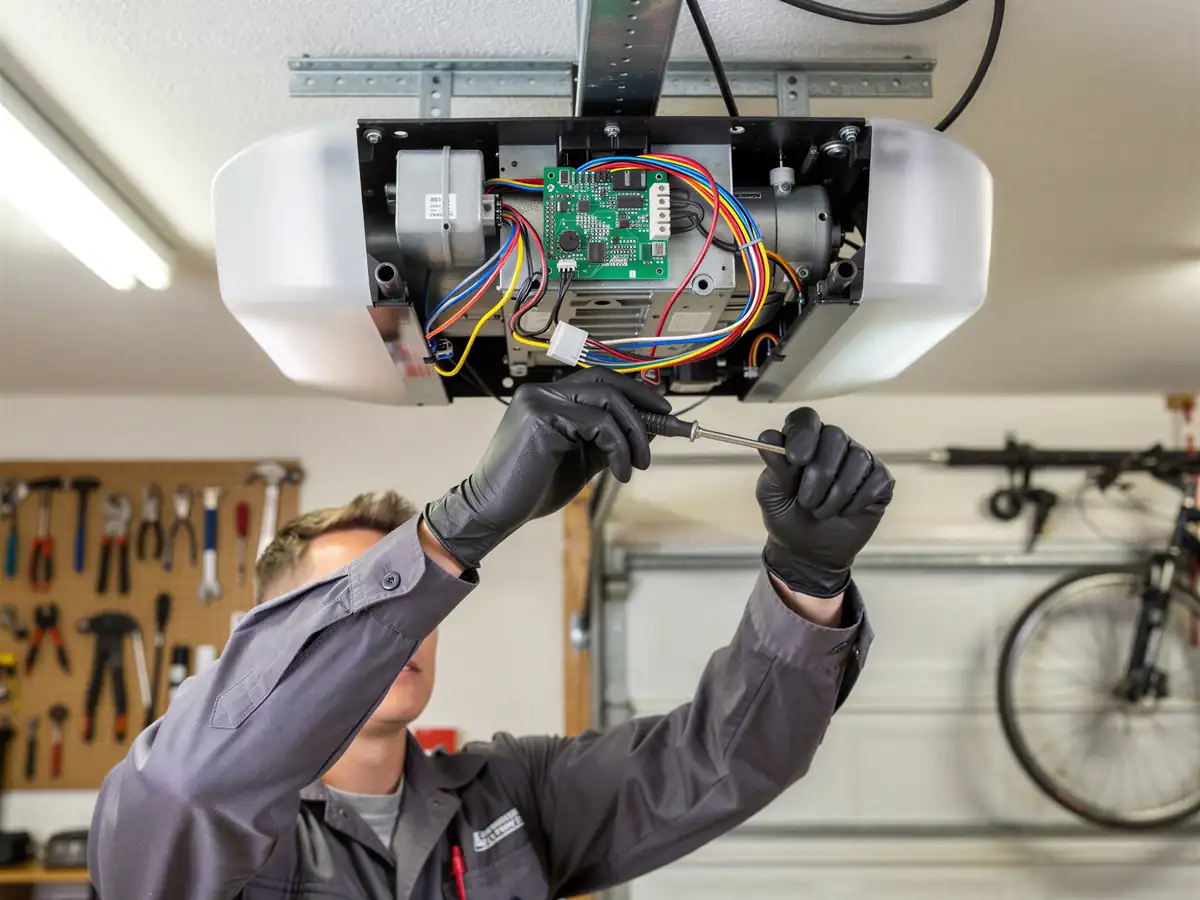
Once we're there, a standard maintenance visit covers the same ground regardless of distance: spring tension, cable wear, track alignment, roller condition, opener force settings, and the weatherstripping. What changes house to house is how much of that list actually needs attention, and in Manor the mix skews toward adjustment work over hardware replacement, because the housing stock here is younger than in a lot of the service area.
We don't promise a same-day slot from this page - that's a scheduling question, not a maintenance one, and it depends on what else is on the board that week. What we can say is that Manor's position relative to Greensburg keeps it in the easy-reach category rather than the end-of-route one.
What Causes It Around Here
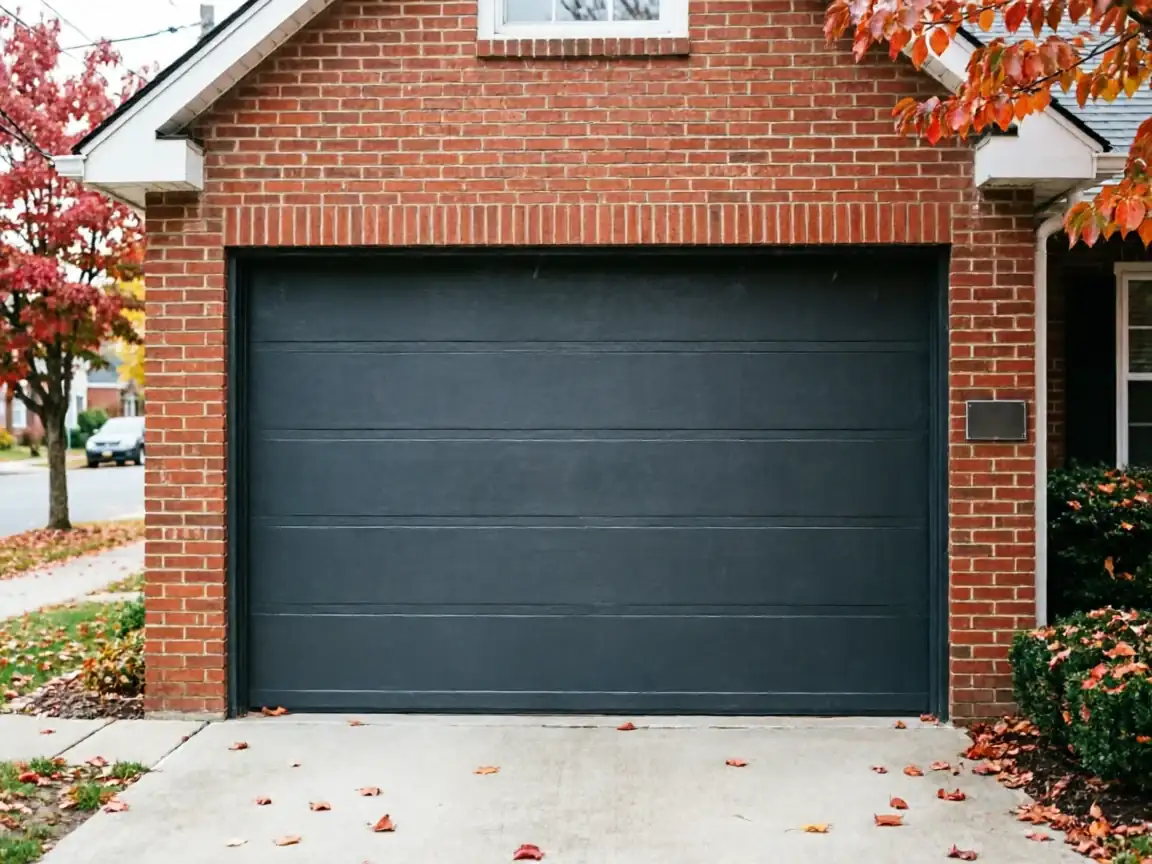
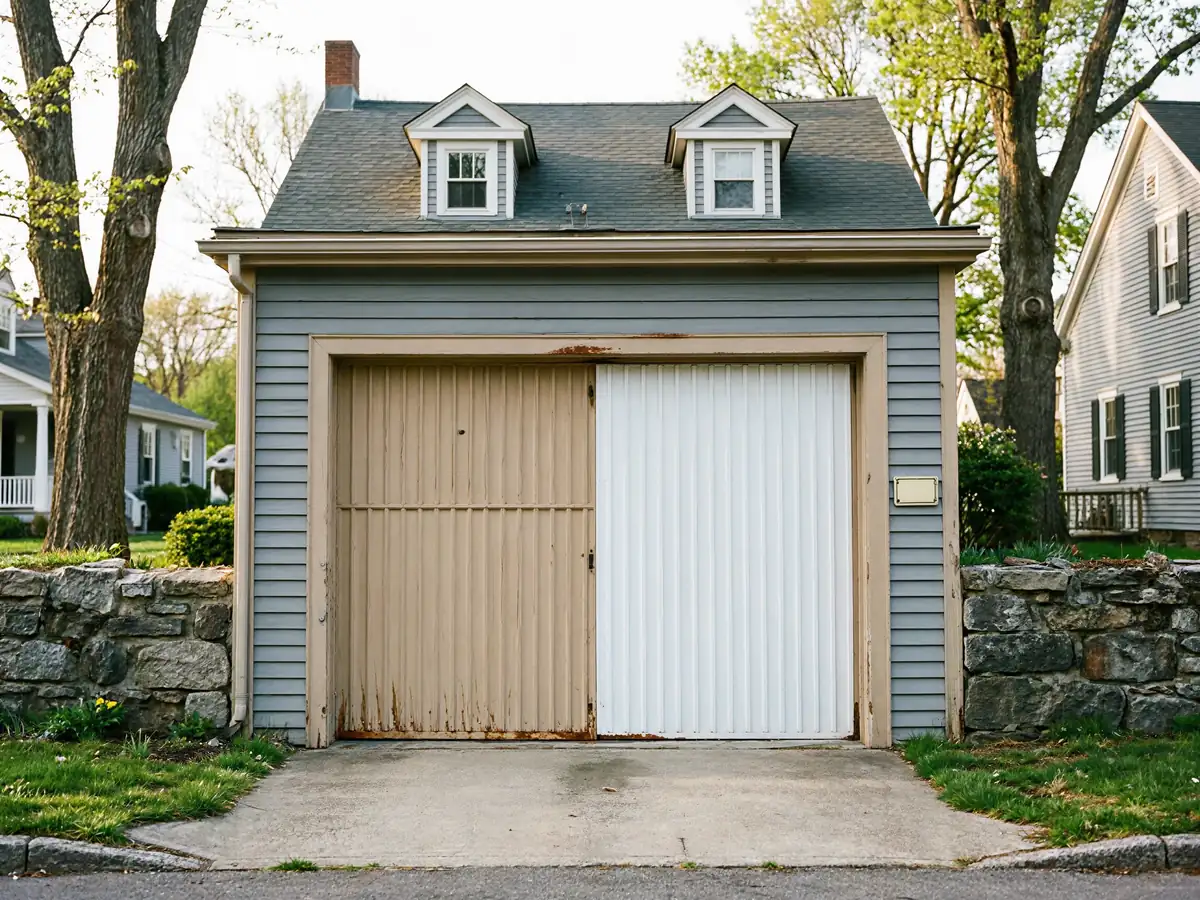
Across the areas we serve, the median home was built around 1950, and most of the 53 named communities in this service area are sitting on pre-1960 housing stock. Manor breaks from that pattern - its median build year runs closer to 1985, a full generation newer than the regional norm.
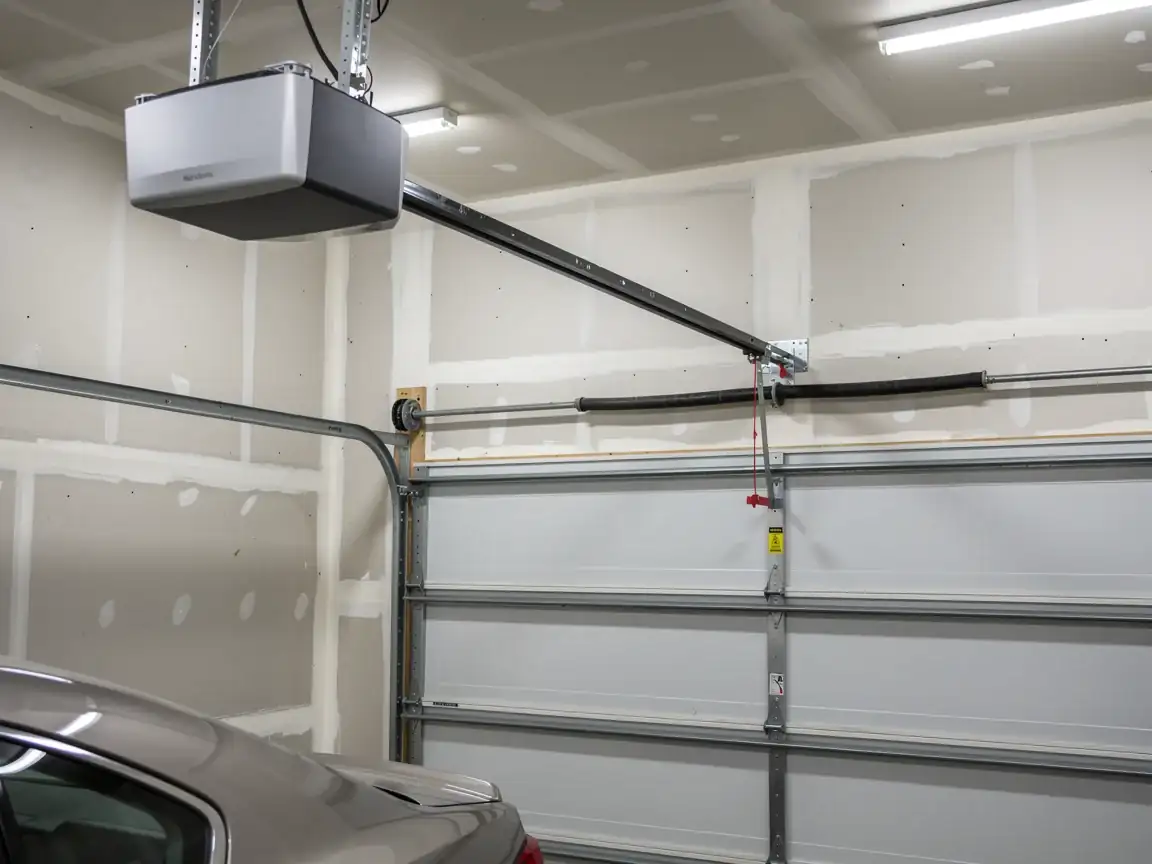
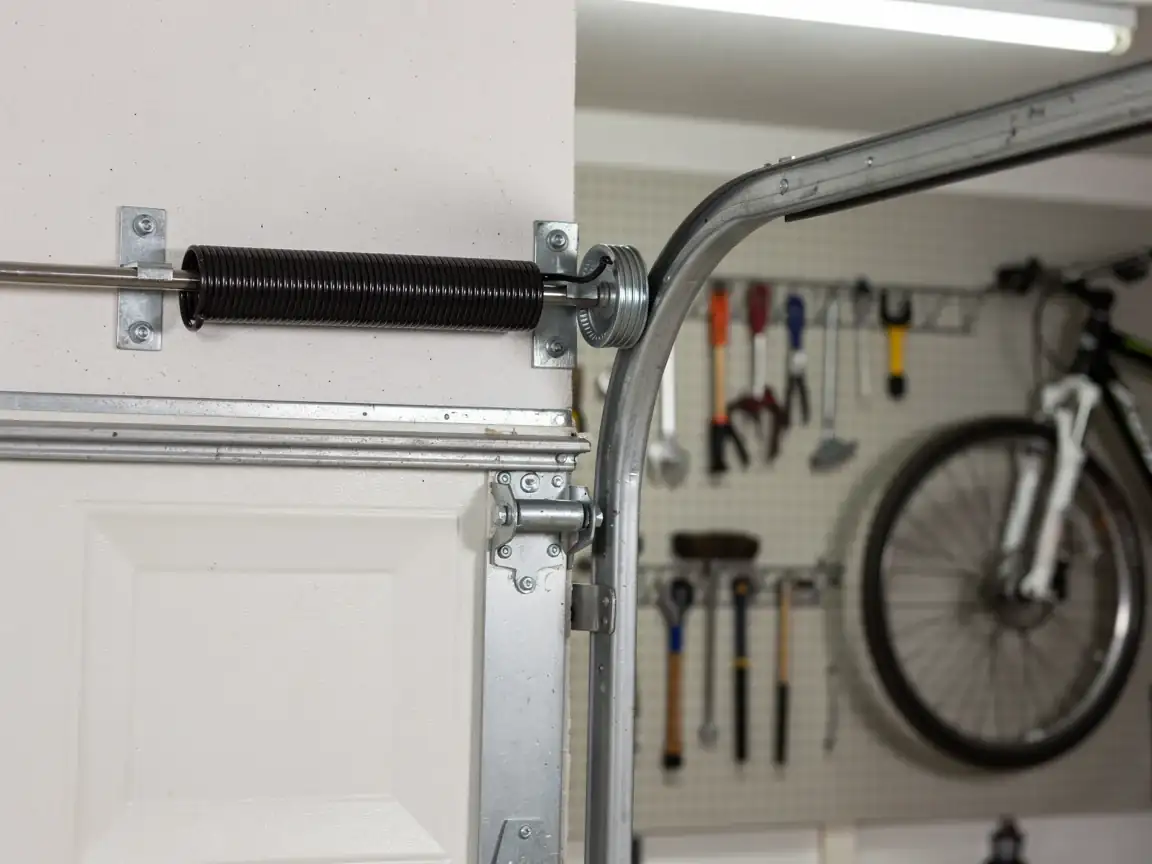
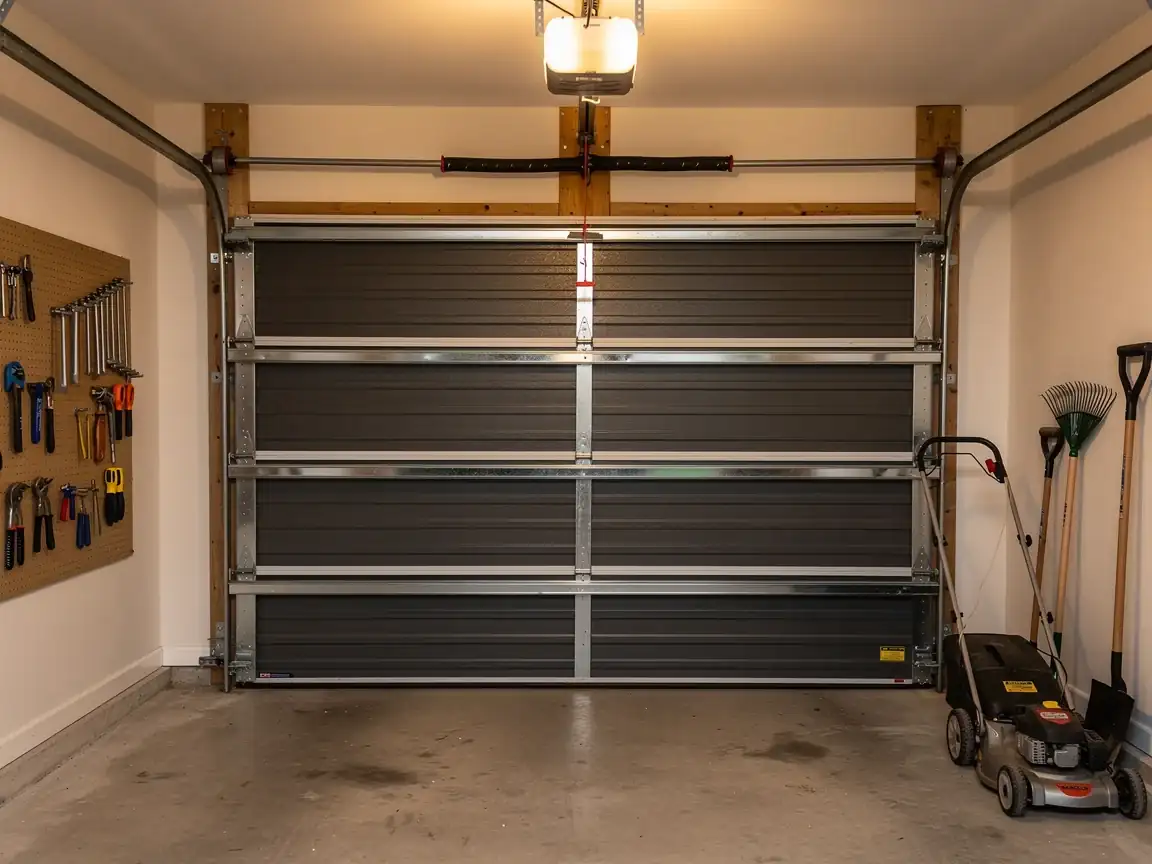
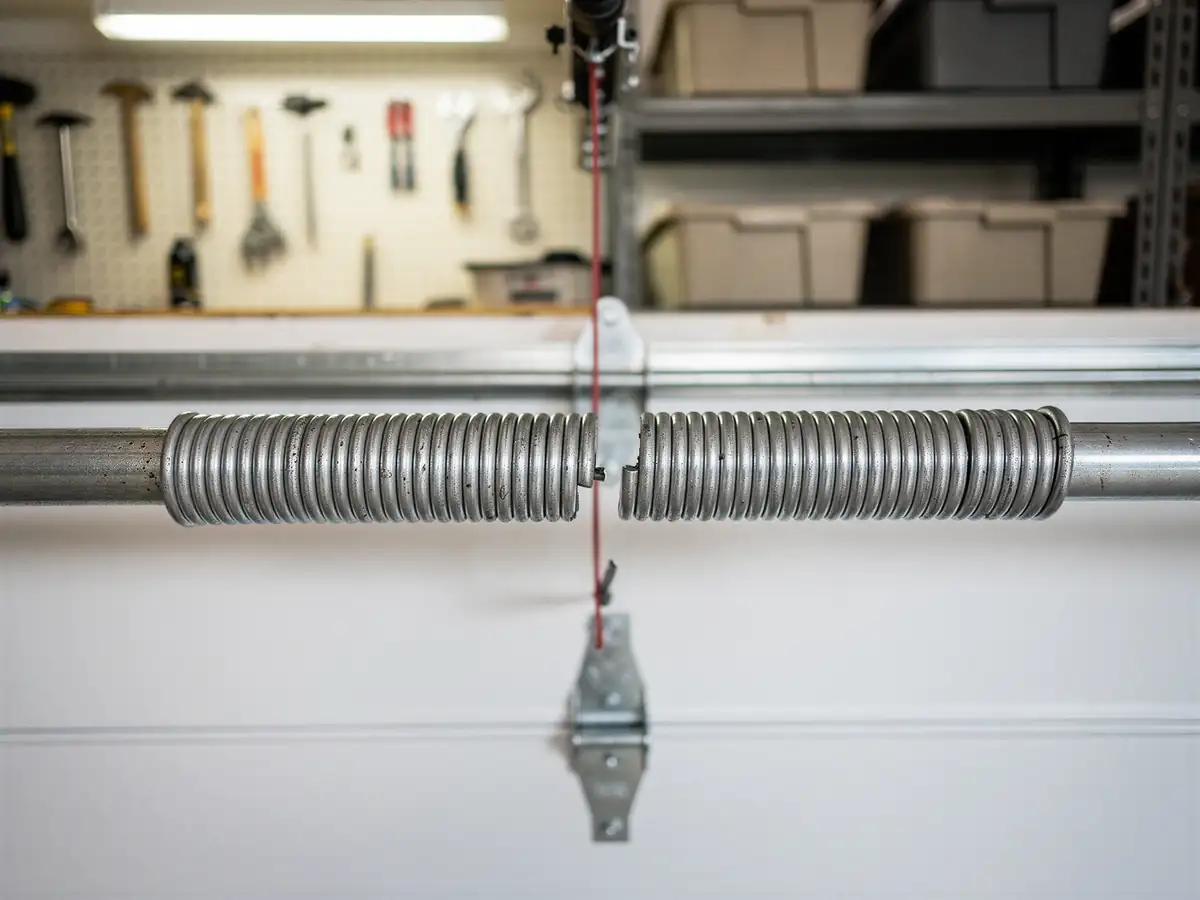
That difference changes what fails and why. A door installed in the 1980s or later is almost always on torsion-spring hardware with a steel panel skin, not the older extension-spring setups with wood or early-steel panels you find on houses built before 1960. Torsion systems fail differently: the spring itself degrades on a wind-cycle count rather than rotting at the jamb, and the failure point is usually the spring or the cable, not the frame.
Winter is still winter here regardless of the build year - this area sits in a cold, severe climate band, and that means grease stiffens, cables ice over, and openers strain against frozen weatherstripping on any door, new or old. On Manor's newer stock, the cold shows up less as wood rot and more as a torsion spring going out of tension or a sensor icing up. It's a narrower list of likely culprits than on an older house, which is one reason maintenance visits here tend to run shorter.
How We Fix It
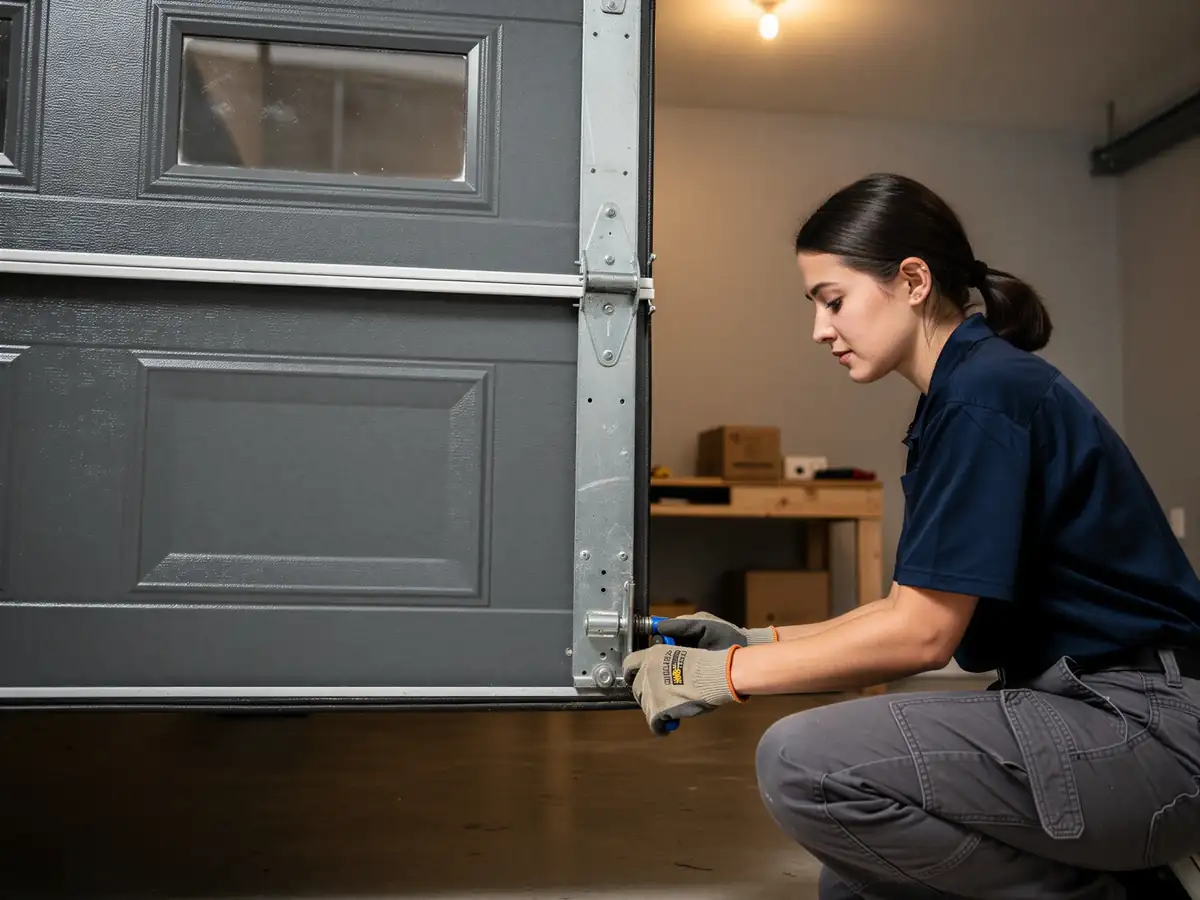
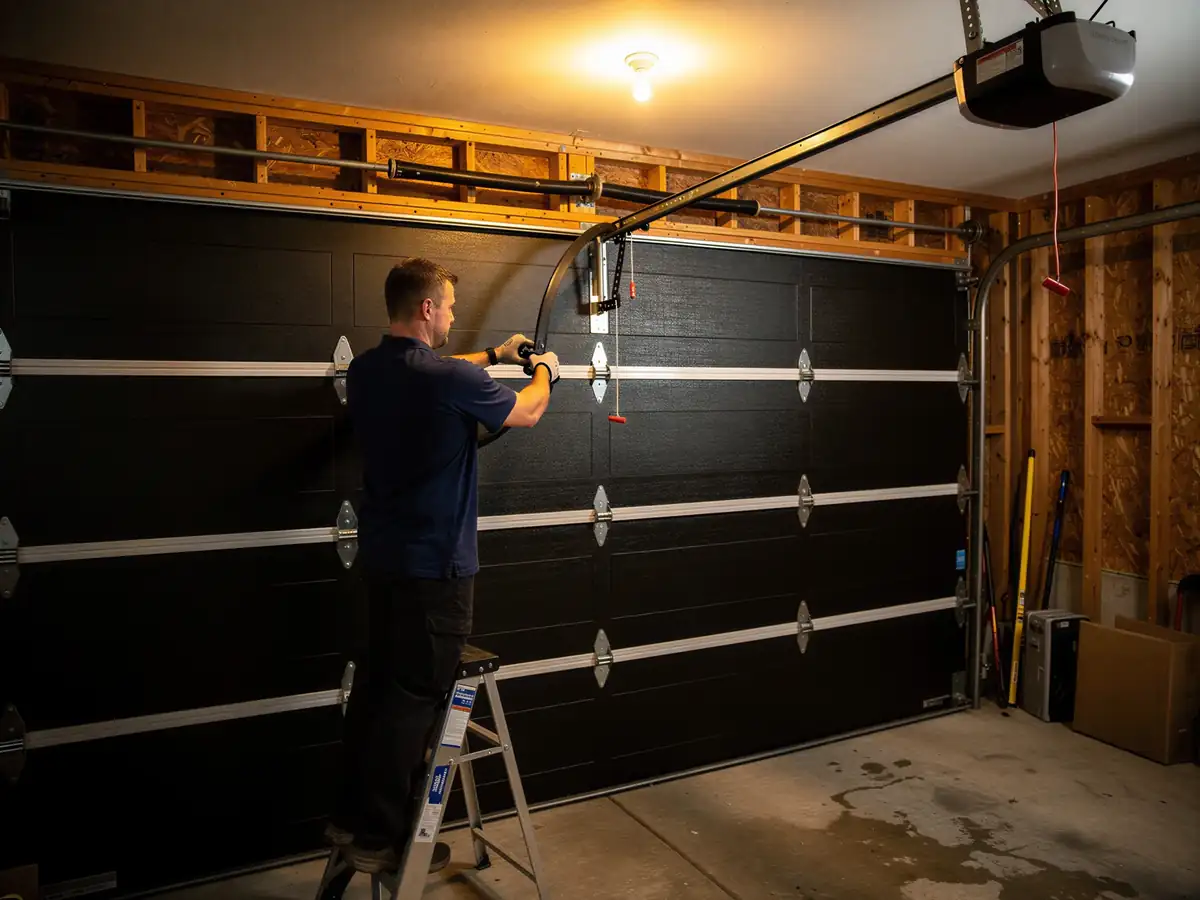
On a newer torsion-spring door, maintenance starts with tension, not structure
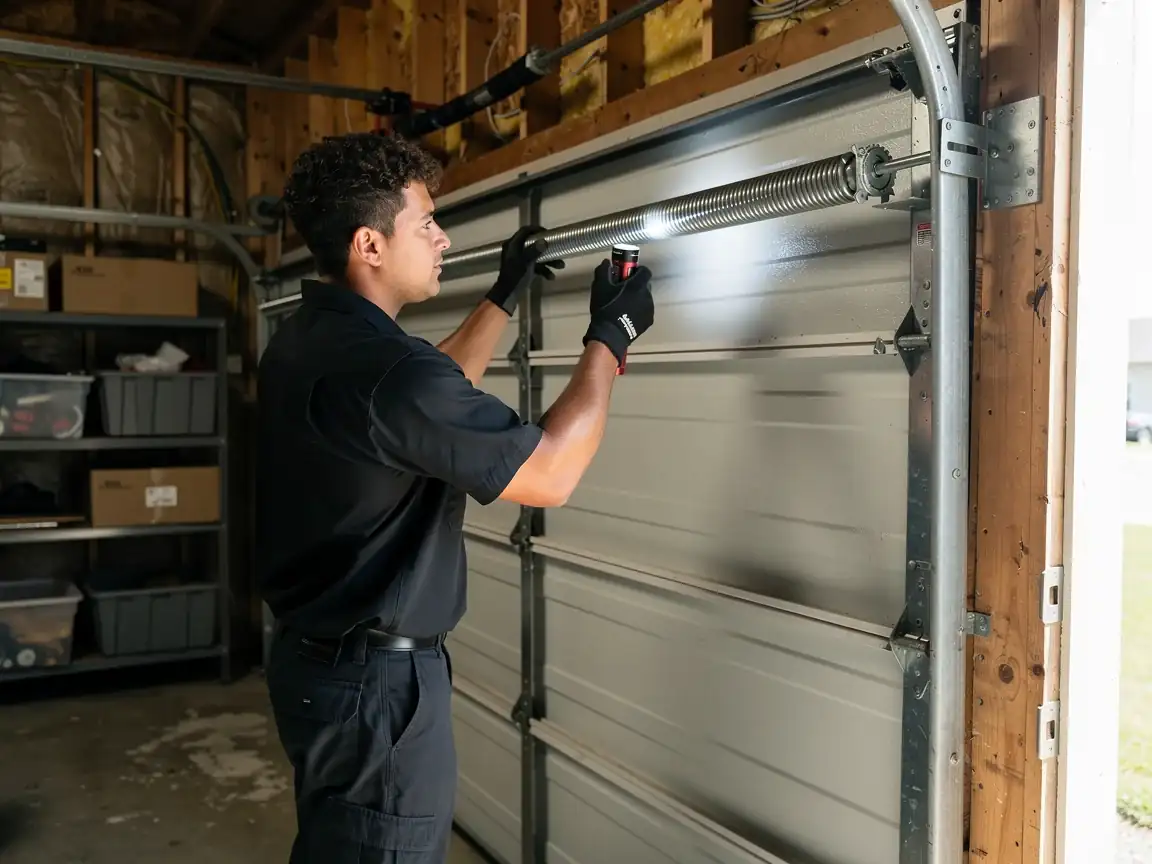
We check spring wind against the door's actual weight, inspect the cable drums for fraying, and confirm the track is still plumb - on a 1980s-era install, misalignment is more often a sign of a settling slab than rot in the jamb.
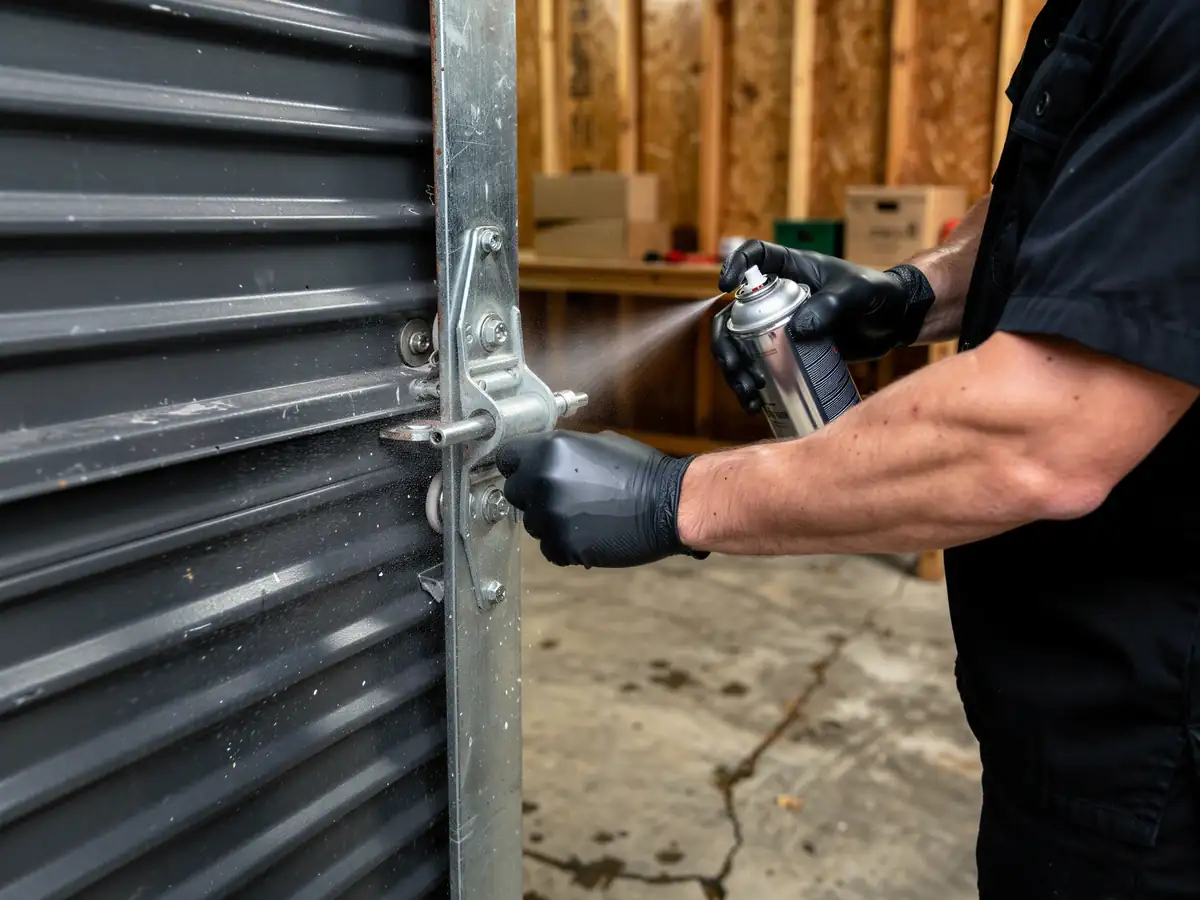
We lubricate the rollers, hinges, and springs with a product rated for cold-weather use
Since the climate here puts real stress on anything that relies on grease staying fluid. We also check the opener's force and travel limits, because a door that's slightly out of balance will make the opener work harder, and that wear shows up on the motor long before it shows up on the door itself.
Weatherstripping gets a look too
Not glamorous work, but a cracked seal on a cold-severe winter means the opener is fighting a door that's binding on ice at the bottom track. One honest limitation: if a spring is already stretched past spec or a panel has hail or impact damage, maintenance won't fix that. At that point we're talking about a repair or a replacement, not a tune-up, and we'll say so on site rather than charging for a service that won't hold.
What You Are Seeing
The signs worth calling about on a newer door are different from what you'd watch for on an older one. A grinding or popping sound when the door opens usually points to a torsion spring losing tension, not a track problem. A door that reverses partway up, or one where the opener strains and then gives up, is often the force settings drifting out of range as the spring ages - common on 1980s-era hardware once it's had a few decades of cycles.
If the door feels fine in warm weather but sticks or hesitates once temperatures drop, that's the cold-severe climate doing exactly what it does to grease, cable tension, and bottom-seal rubber. It's not a sign anything is broken yet, but it is a sign the lubricant and seals are due.
A door that's suddenly heavier to lift by hand, or one where one side visibly rises faster than the other, means the spring and cable system is out of balance - on a torsion setup, that's not a quick DIY fix, since the spring is under real load. That one's worth a call rather than a guess.